The train that follows the river-to-park line
Since 1993, a light-rail line has run beneath downtown and west along an old rail corridor to Forest Park, tying the city's riverfront, midtown and park together in one ride.
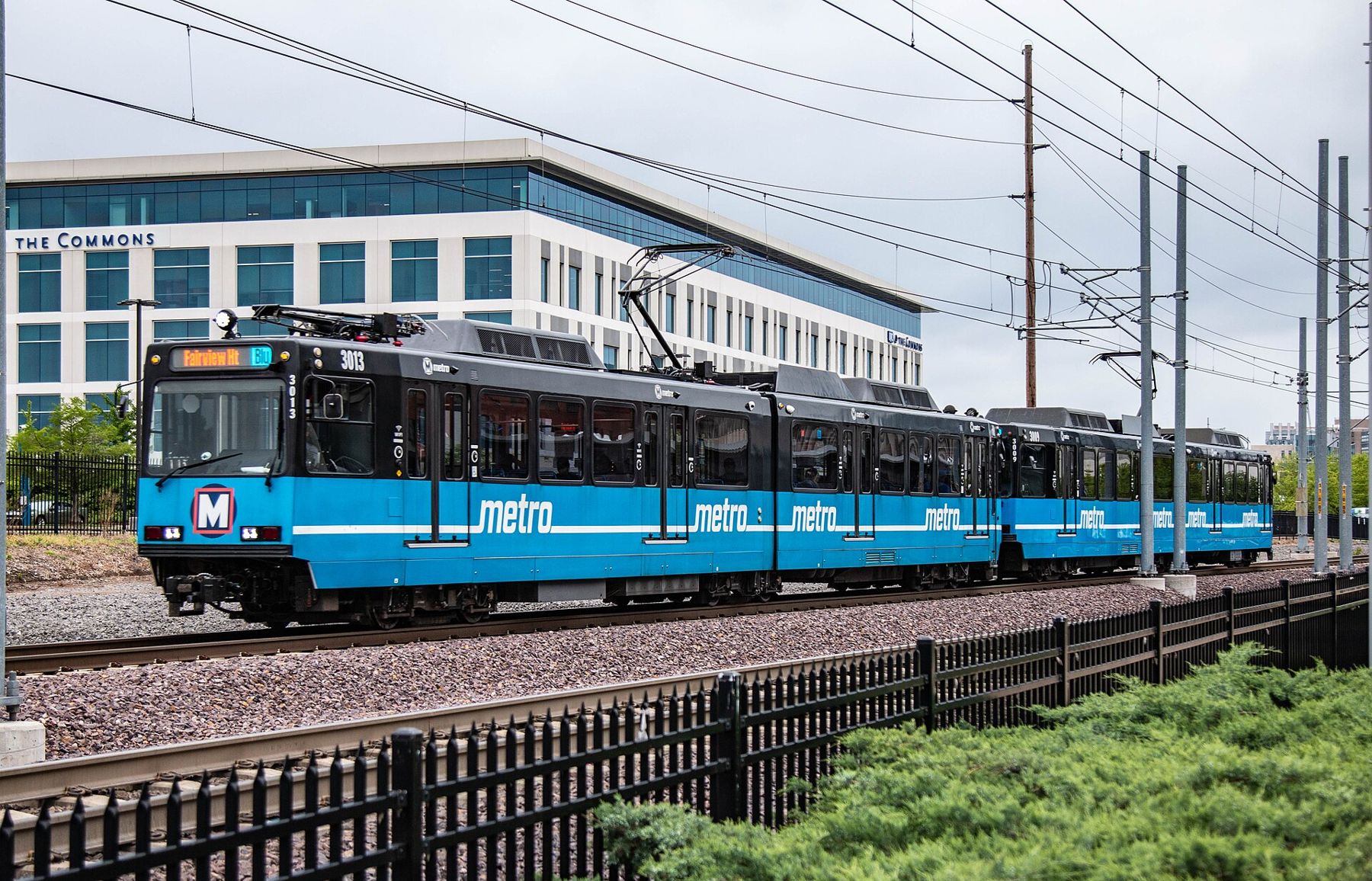
A line that follows the city's spine
St. Louis grew west from the river, and MetroLink follows the same direction. The region's light-rail system opened in 1993, and its main line runs from Illinois across the Mississippi, beneath downtown, then west through midtown and the Central West End to Forest Park and beyond. Two lines, Red and Blue, share track through the center of the city, and the stretch between the riverfront and Forest Park covers nearly every place in this guide.
For a visitor, the train is the simplest way to tie the city together. You can see the Arch and the riverfront in the morning, ride out to Forest Park for the afternoon, and stop at Union Station or the Central West End on the way back, without driving or parking.
From the river
The line crosses the Mississippi on the lower deck of the Eads Bridge, the steel arch bridge that opened in 1874. On the Missouri side, the first stop is near the Arch and Laclede's Landing. From there the trains dive into an old railroad tunnel beneath downtown, running under the streets past stops for the convention center and the business district.
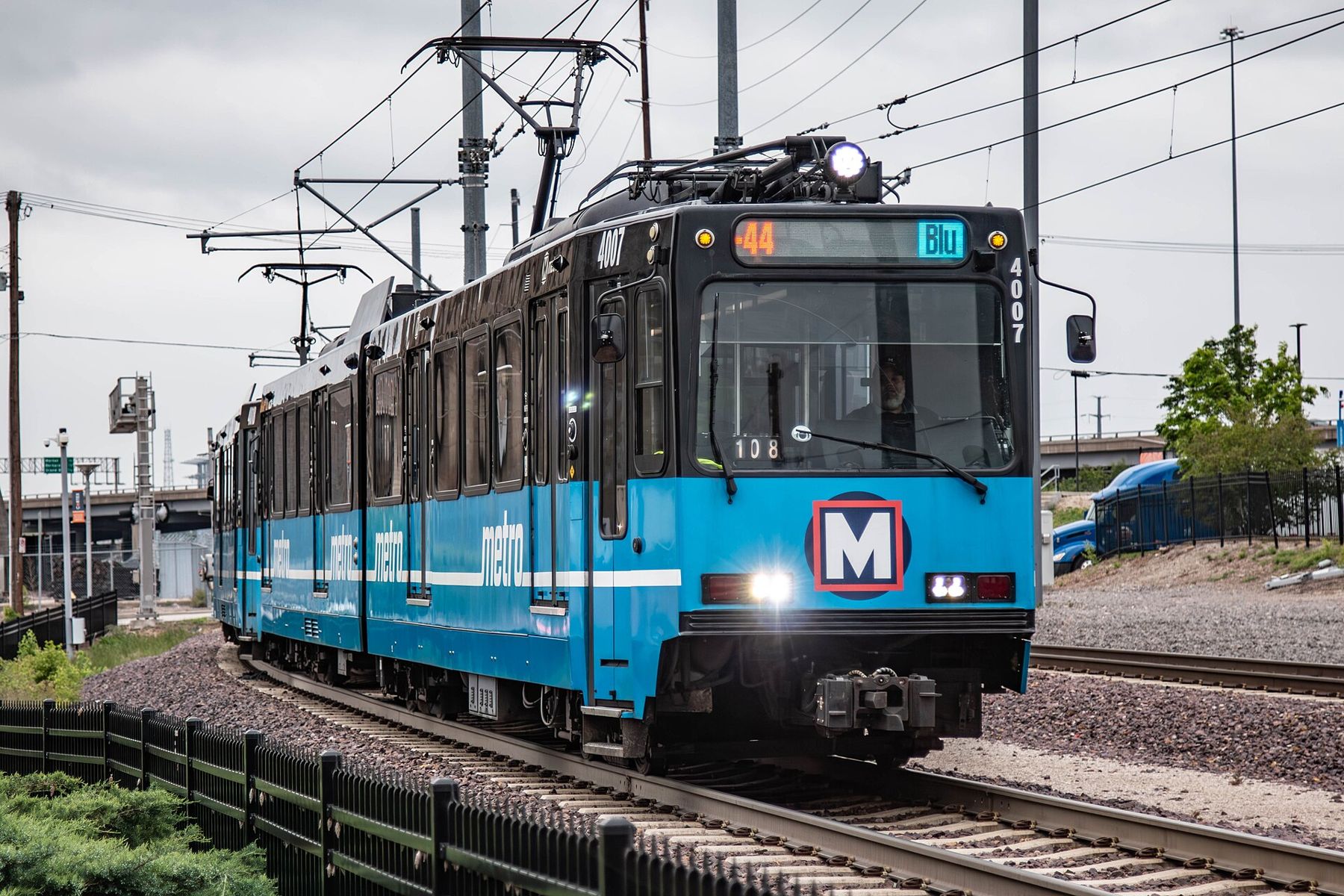
Downtown stations put you within walking distance of the Old Courthouse, City Museum and the Gateway Mall. Stadium station serves the baseball park, and Civic Center is near the city's government buildings.
West along the old rail corridor
West of downtown, the line comes up to the surface and runs along an old railroad corridor. This route passes through what was once Mill Creek Valley, a densely populated, largely Black neighborhood that the city cleared in the late 1950s and 1960s. Thousands of residents were displaced. Much of the land became highways, rail yards and commercial buildings. From the train, you see a landscape shaped by that clearance.
Union Station, the former railroad terminal, has its own stop. The 1894 head house and train shed are a short walk from the platform. Further west, Grand station serves Saint Louis University and is the gateway to Grand Center's theatres and museums.
Mile 4.2Gates, mansions and the walk to the parkMidtown and the Central West End
Between Grand and the Central West End, the line passes the Cortex station, serving a district of research labs and offices built in and around old industrial buildings. The Central West End station sits at the edge of a large medical campus and is a short walk from the neighborhood's shops and restaurants, the Cathedral Basilica and the private places and mansions of the Central West End.
From here, the line continues west to Forest Park-DeBaliviere, on the park's northeast corner. This is the best stop for the Missouri History Museum, the Jewel Box and the Muny. The Red and Blue lines split here: one heads northwest toward the airport, the other southwest toward Shrewsbury. Skinker station, on the Blue Line, is close to the park's western edge.
What to watch from the window
The ride is short, but it repays a window seat. Crossing the river, you look down on barges and the brown current of the Mississippi, with the Arch rising beside the bridge. In the downtown tunnel there is nothing to see but the lights of the stations, and then the train climbs into daylight among rail yards, bridges and the backs of old brick warehouses.
West of Union Station the view opens up. Highways run alongside, the towers of downtown shrink behind you, and the skyline of Saint Louis University and the medical campus rises ahead. Between stations you pass loading docks, painted brick walls with the ghosts of old advertisements, and new glass buildings going up on land that was industrial a generation ago. Near the end of the run the trees of Forest Park appear beside the tracks, and the city quickly turns green.
Fares and tickets
MetroLink fares are paid before boarding, at machines in the stations or through a mobile option. Fares and pass types change, and there are reduced fares for some groups, so check before you go. Keep your ticket or pass with you during the ride, as fare inspectors check on board and at stations.
In recent years, the transit agency has added security measures at stations, including fencing and gates at some locations. The details are still evolving, so plan for a few extra minutes at the station on your first trip.
Safety and comfort
MetroLink is used by commuters, students, sports fans and visitors, and most rides are routine. As in any city transit system, stay aware of your surroundings, keep your belongings close and sit near other passengers or the front car late at night. Security staff and police patrol the system.
Trains run frequently during the day and less often at night and on weekends. Service hours vary, so check the current schedule if you plan to ride late.
A sample day on the line
- Start at the riverfront station and walk to the Arch.
- Ride to a downtown stop for the Old Courthouse and the Gateway Mall.
- Continue to Union Station to see the Grand Hall and the train shed.
- Get off at the Central West End for lunch and a walk.
- Finish at Forest Park-DeBaliviere for the History Museum and a walk into the park.
The ride from the river to the park takes about twenty to twenty-five minutes without stops. Spread out over a day, the line becomes a tour of the city's history, from the French founding near the levee to the World's Fair grounds in the west.