The riverfront · Old Courthouse
Under the dome, a family's case for freedom
In this domed courthouse an enslaved couple asked a St. Louis jury to recognize them as free. What the highest court in the land did with their case pushed the country toward war.
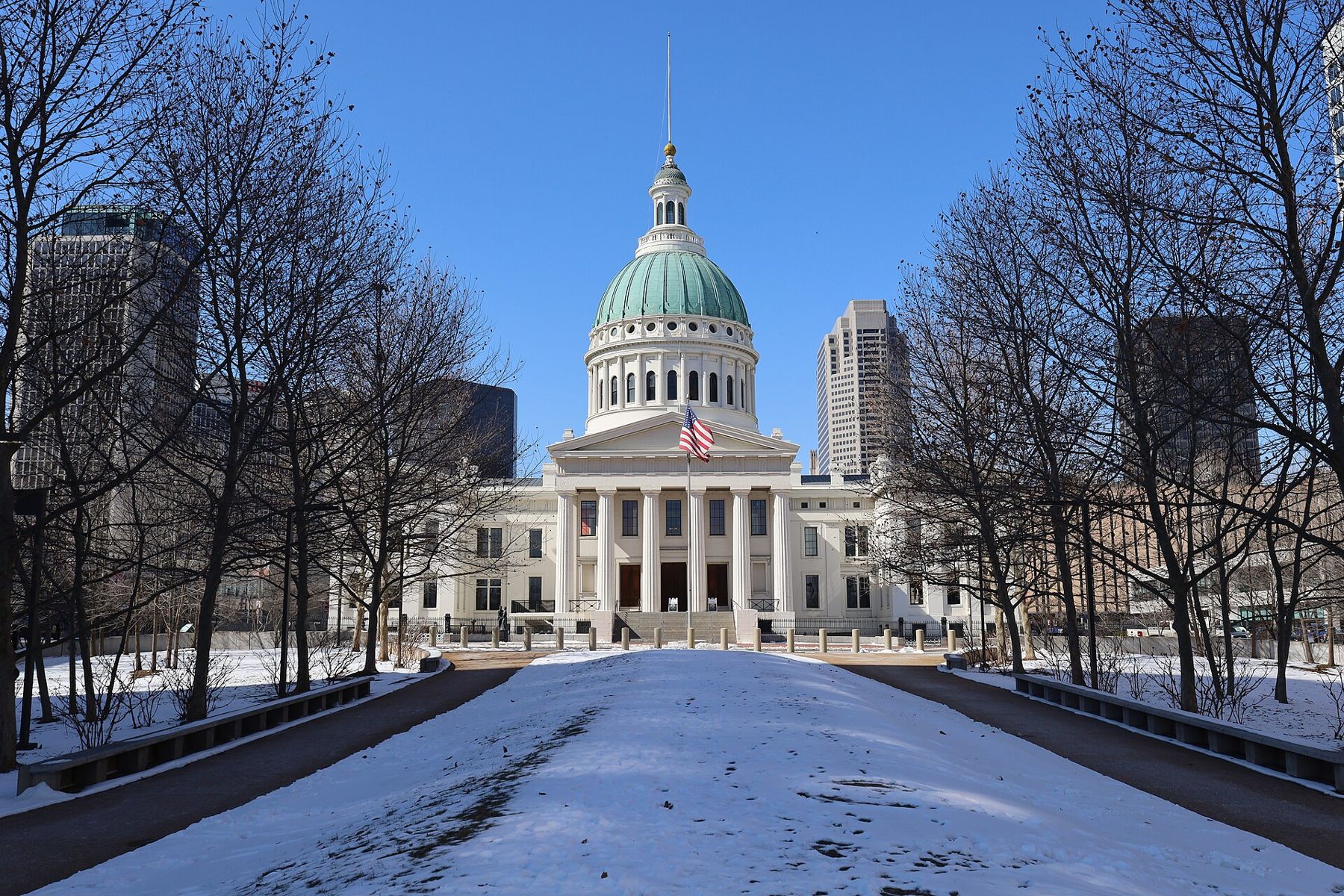
Stand on the grass between the Arch and downtown and look west. The building closing the view is the Old Courthouse, a pale cross-shaped block with columned porches on its four sides and a ribbed green dome above. For decades it was the tallest thing in St. Louis. Now it sits among office towers, but its importance has never been a matter of height.
Construction began in 1839 and went on, in stages, until 1862. The dome that tops it was rebuilt in cast iron in the early 1860s, on the eve of the Civil War, and its interior was painted with murals showing scenes from the city's history and allegorical figures of law and liberty. The building served as the county and then the city courthouse until the early twentieth century, and it is now part of Gateway Arch National Park.
The Scotts go to court
In 1846, Dred Scott and his wife, Harriet, filed suits for their freedom in the St. Louis circuit court, then held in this building. They had been enslaved, but they had lived for years with the man who held them in places where slavery was forbidden: the free state of Illinois and the territory that later became Minnesota. Missouri law, at the time, recognized that a person held in slavery on free soil could claim freedom, and St. Louis courts had granted such claims before.
The first trial failed on a technicality about evidence. At a second trial, in 1850, a St. Louis jury found for the Scotts, and for a time they had a court's word that they were free. The case went to the Missouri Supreme Court, and in 1852 that court reversed the verdict, breaking with its own earlier rulings in a political climate that had hardened.
The fight moved to the federal courts. In 1857, the United States Supreme Court decided against Dred Scott. The chief justice, Roger Taney, wrote that Black Americans, free or enslaved, were not citizens and could not sue in federal court, and that Congress had no power to forbid slavery in the territories. The ruling meant to settle the question of slavery's spread. It did the opposite, and it is now counted among the worst decisions the court has made.
The Scotts were freed later in 1857, not by any court but by Taylor Blow, a son of the family that had first enslaved Dred Scott. Dred Scott died the following year in St. Louis. Harriet Scott lived on in the city for many more years. Their daughters, Eliza and Lizzie, were freed with them.
What else happened on these steps
The courthouse was also a marketplace for human beings. Enslaved people were sold at auctions on its steps, most often in sales to settle estates. That history sits alongside the freedom suits, which hundreds of enslaved people filed here over the decades, and some won. The suits were not rare acts of defiance but a known legal route, used by women and men who had been carried onto free soil and could find witnesses to say so. Each one was a family's life argued in a courtroom a few steps from where people were being sold.
In the 1870s, Virginia Minor began a suit here after she was refused when she tried to register to vote. Her case also reached the Supreme Court, which ruled against her in 1875. Both stories are part of why the building matters, and both are told inside when the galleries are open.
Mile 0.8Fountains, bronze and a mile of grassOn the grounds, a bronze statue of Dred and Harriet Scott stands near the building. It was placed in 2012, and shows the two of them side by side, looking out over the city where they made their claim.
Is it open
The Old Courthouse has been closed to the public for a long renovation in recent years, and its opening, the galleries inside and the rooms you can enter change as work finishes. Some years only the grounds and the outside have been open. Check with the National Park Service before you plan your day around the inside.
Now it sits among office towers, but its importance has never been a matter of height.
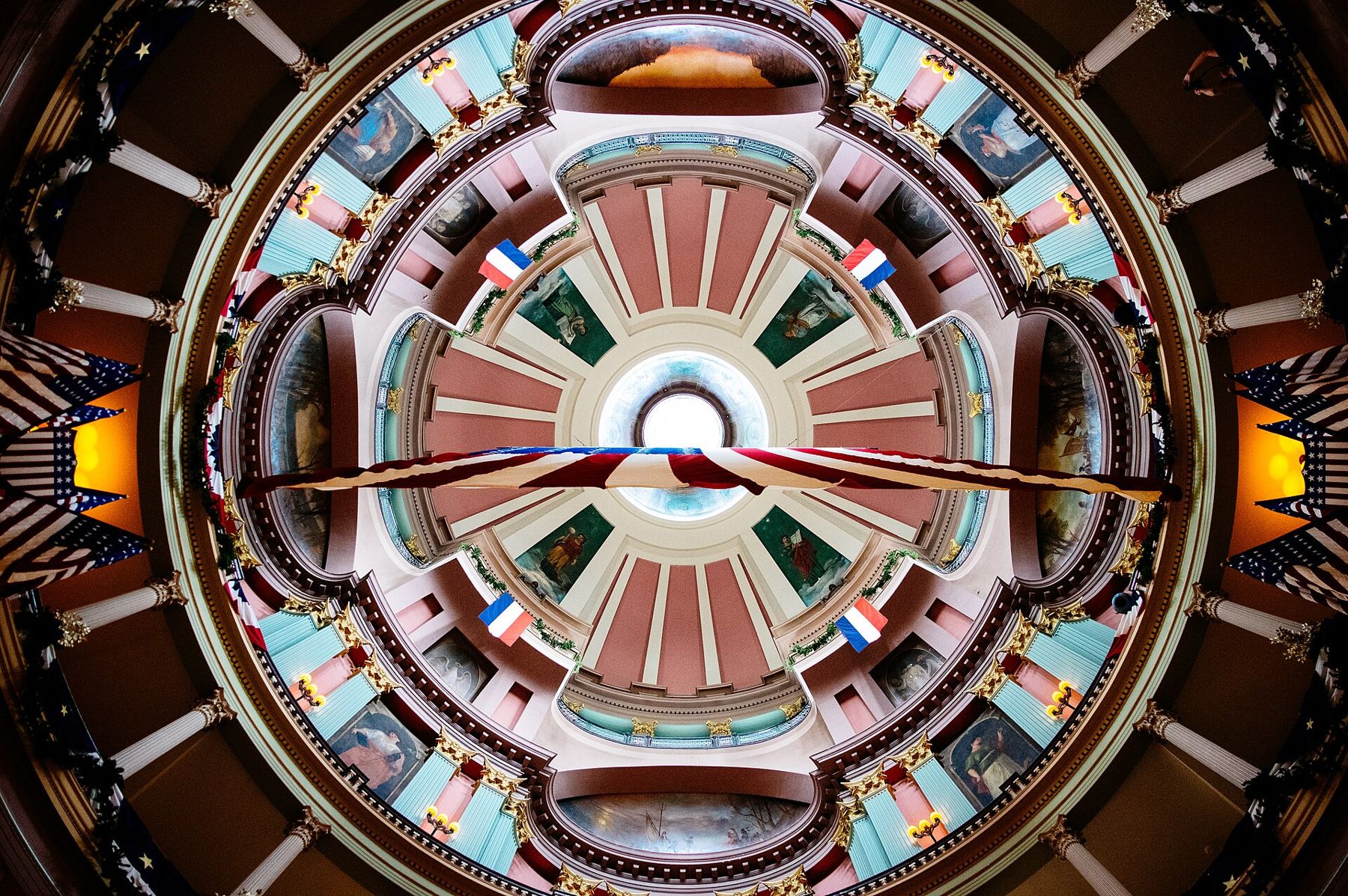
When the building is open, the restored courtrooms upstairs show how a nineteenth-century trial room was laid out, with the judge's bench, the jury box and the gallery close together. The rotunda under the dome is the room to spend time in. Stand in the center and look straight up through the tiers of balconies to the painted ceiling.
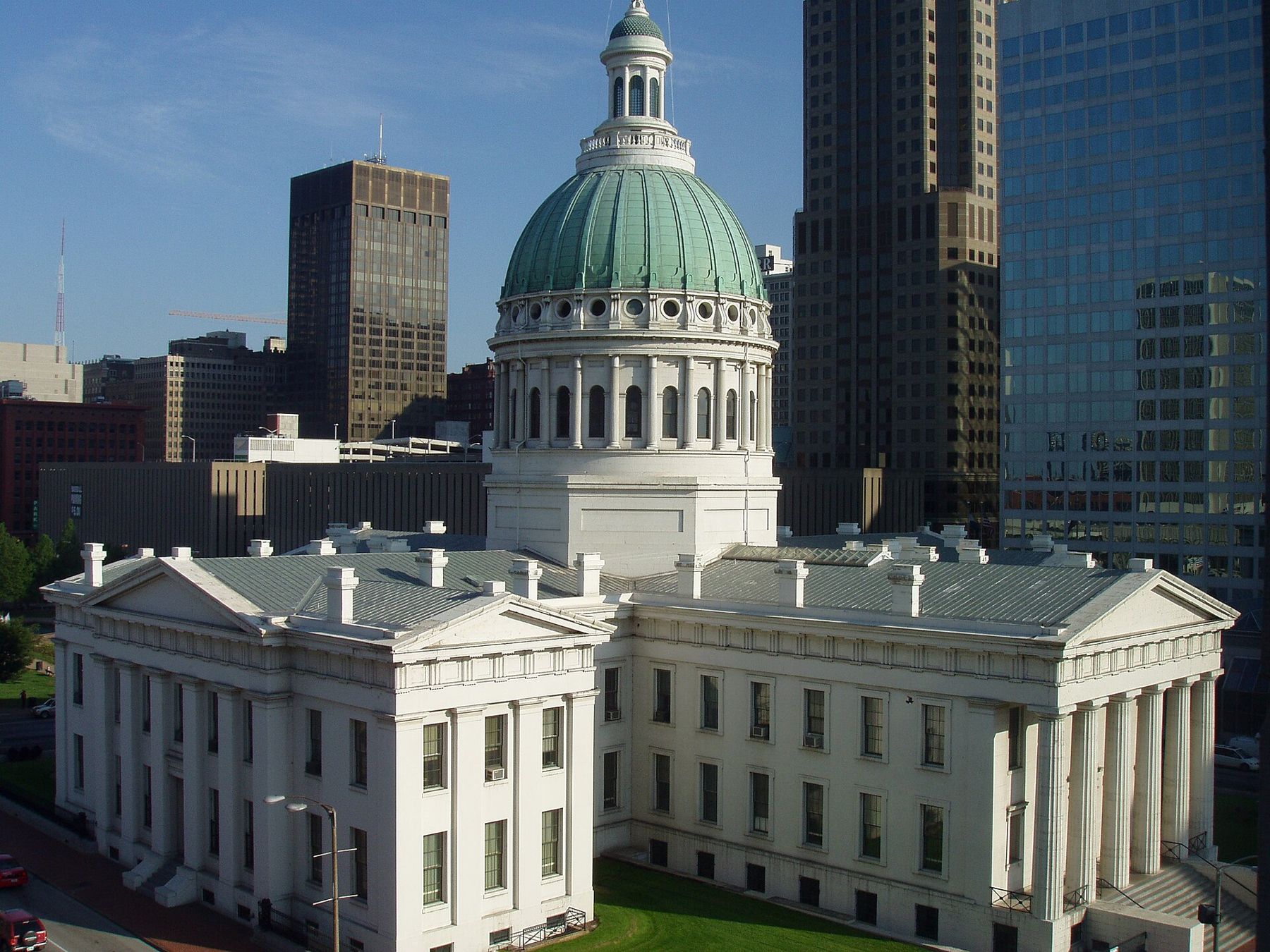
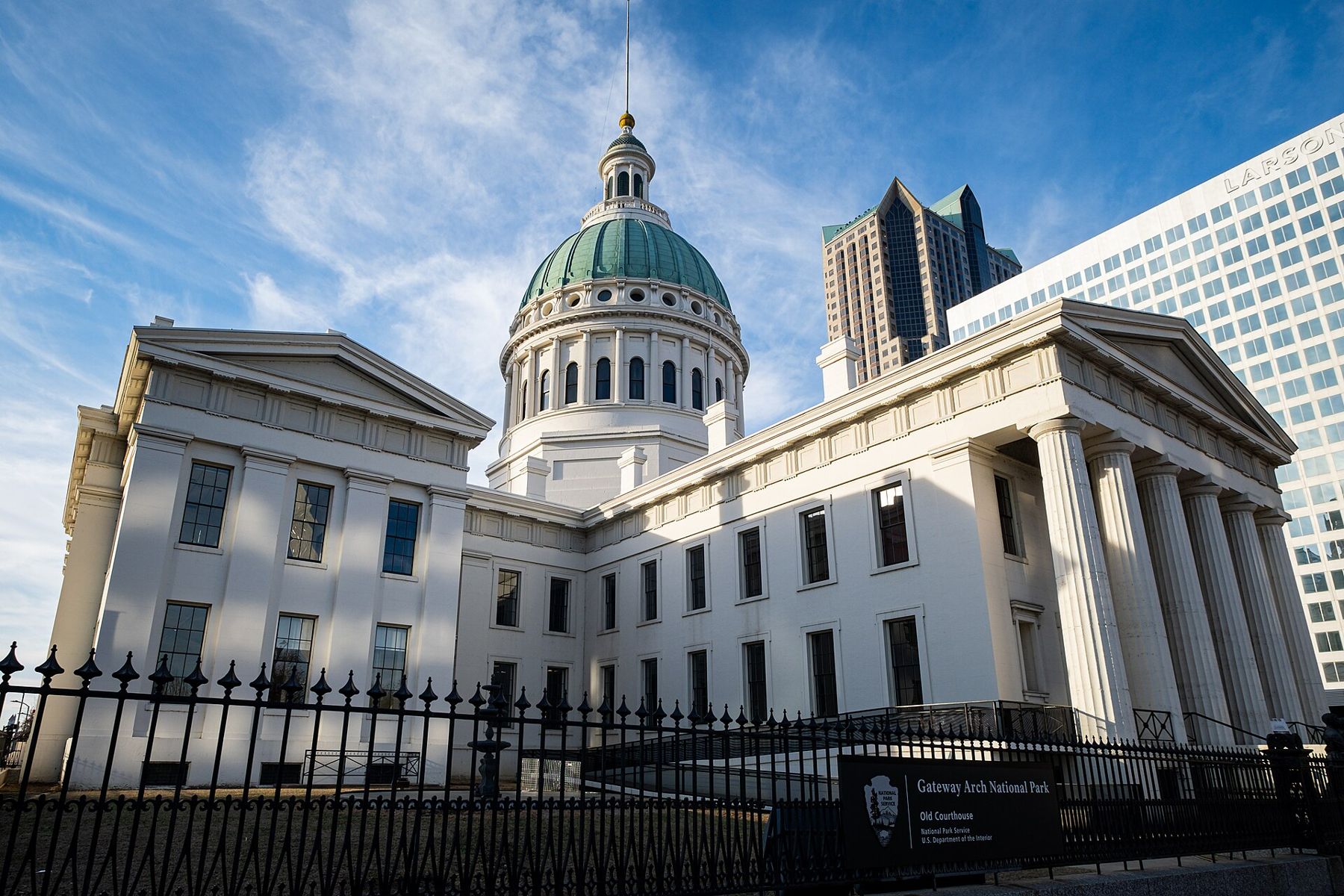
Even from outside, the building rewards a slow circuit. The four porticoes are not identical, since the wings were built at different times, and the dome sits on a tall drum ringed with columns and windows. Iron fences, granite steps and old trees make the grounds feel set apart from the towers around them.
The view down the mall
Walk around the building to its west side and the view opens the other way. A long strip of lawns, trees and plazas runs west from the courthouse for more than a mile, the Gateway Mall, with downtown on both sides. It was cleared bit by bit through the twentieth century, much as the riverfront was cleared for the Arch.
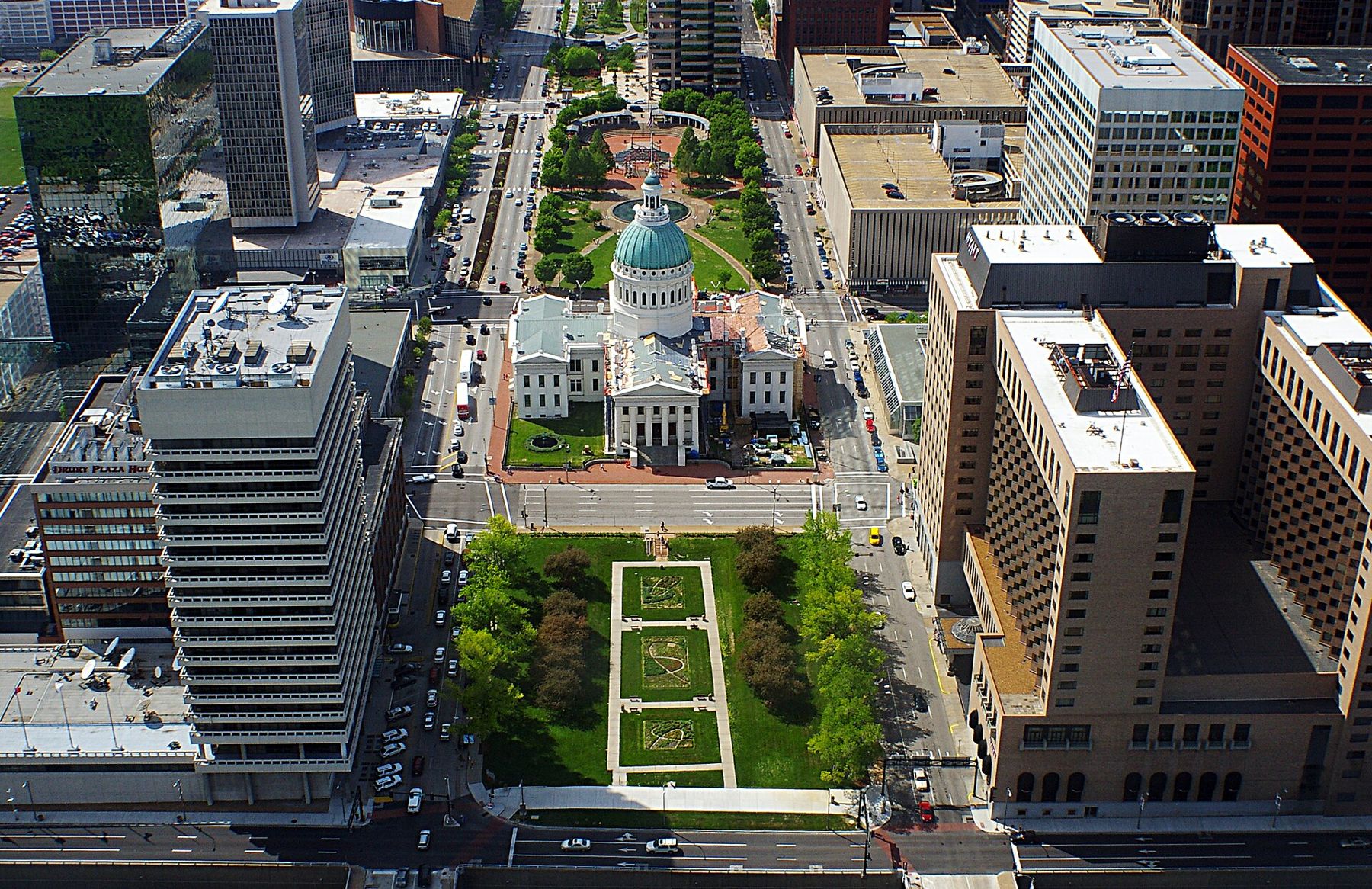
From the west steps the composition is one of the best in the city: courthouse dome in front, Arch rising behind it, both lined up on the same axis. Just across Broadway, Kiener Plaza has a fountain, a playground and open steps where people sit at lunch. The photo most visitors take is from there.
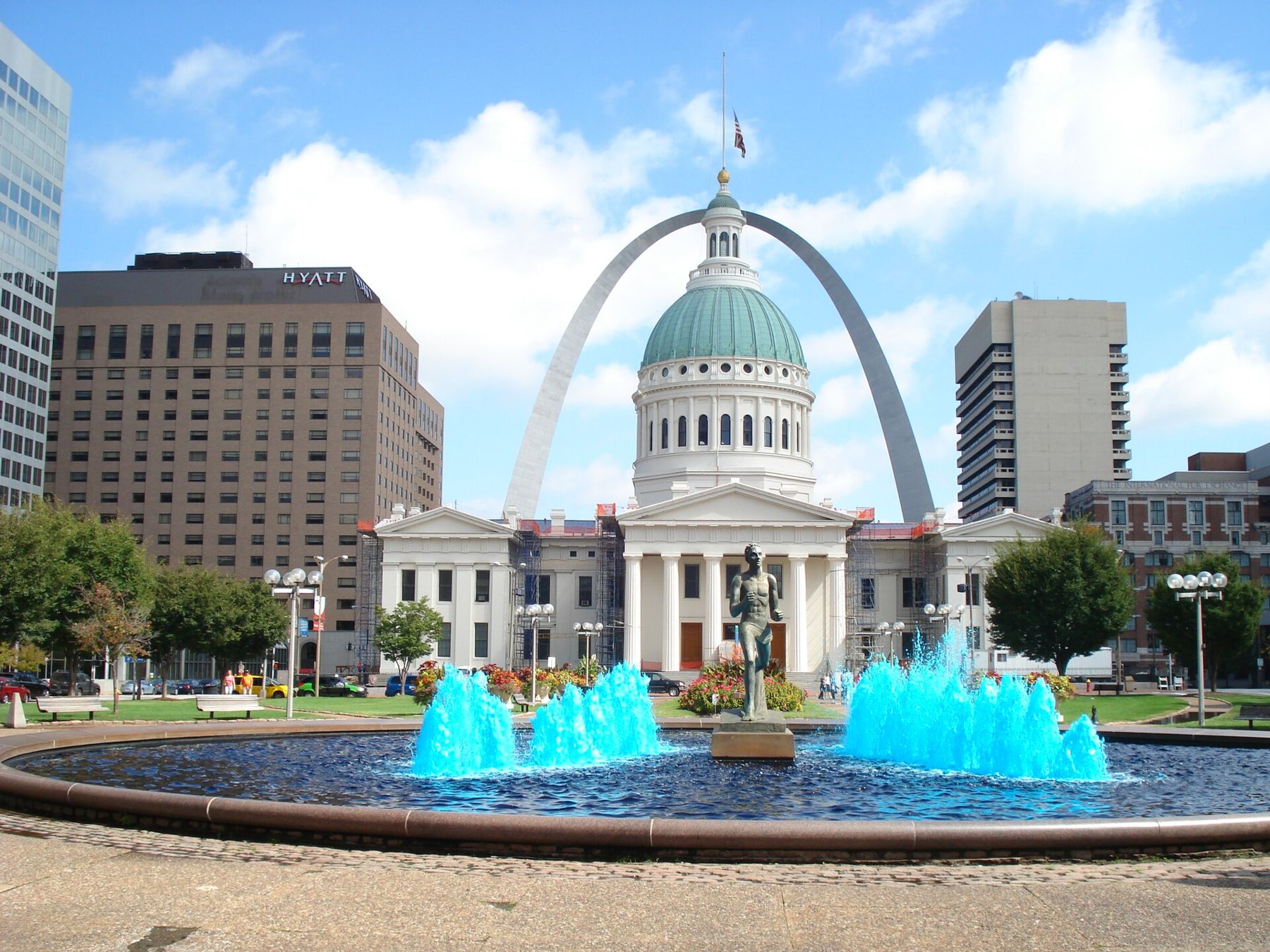
From the courthouse, the walk west follows the mall to Citygarden, a few blocks on, where the fountains and sculpture make a good rest. East, across the landscaped lid over the highway, is the Arch and its museum, which covers the same years from a different angle and is worth seeing on the same day.
Practical notes
Give the grounds and the statue half an hour even when the inside is closed. If the galleries are open, allow an hour or more, longer if you read every panel on the Scott case. There has long been no charge for entry, but confirm that and the hours before you go.
Spring and fall are the most comfortable seasons for the walk between the courthouse, the Arch and the mall. The paths are wide and level. The nearest MetroLink station is 8th & Pine, a few blocks west. If you want more of the old city around you, walk north toward Laclede's Landing, where the warehouse streets survived.