Downtown · Downtown St. Louis
Fountains, bronze and a mile of grass
Downtown St. Louis has a long green spine running west from the Old Courthouse. Its best two blocks are Citygarden, where the sculpture is meant to be touched and the fountains to be walked through.
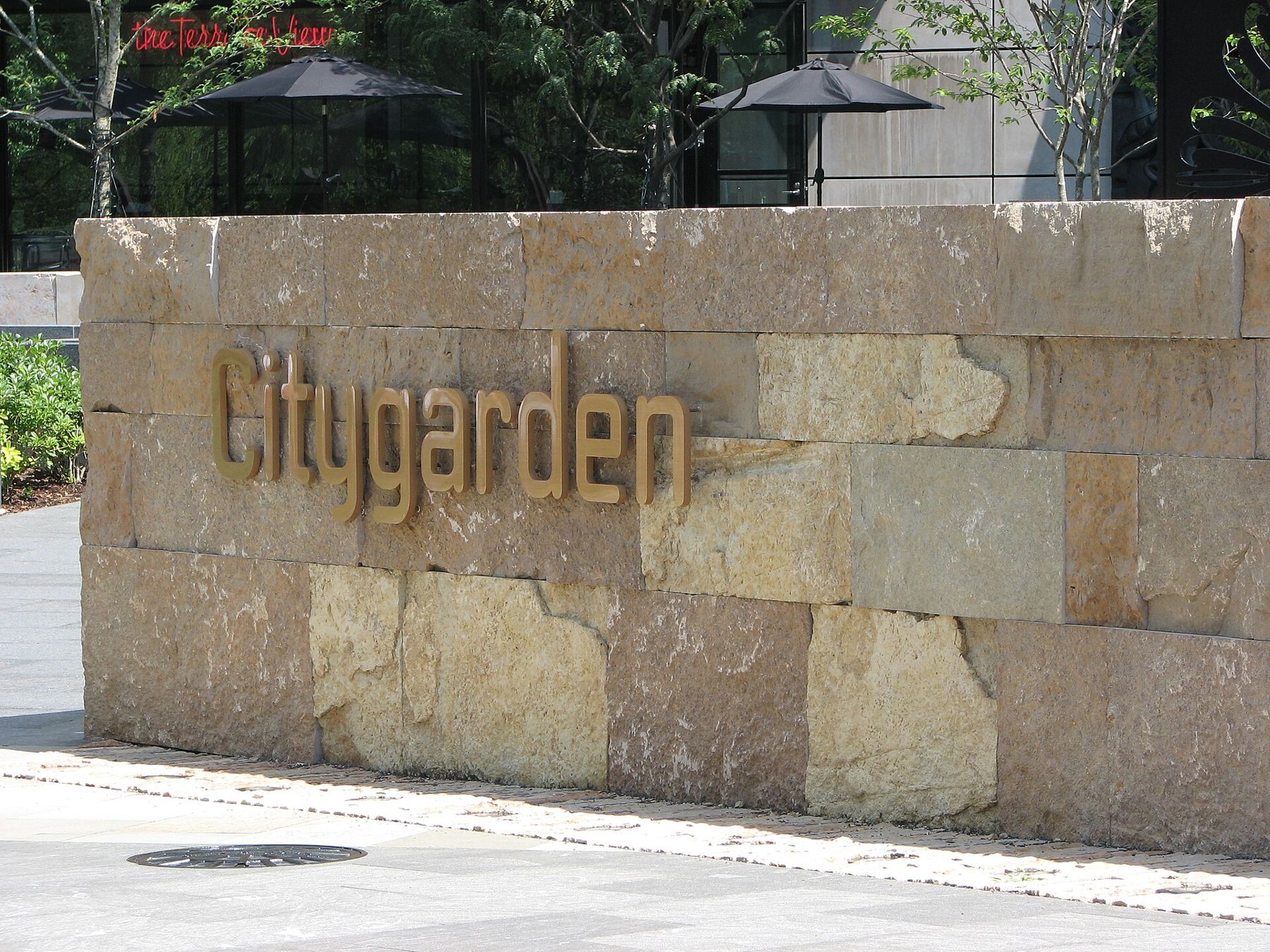
From the west steps of the Old Courthouse, a long strip of open land runs west through downtown: lawns, trees, plazas and sculpture, block after block, all the way toward Union Station. This is the Gateway Mall. It was assembled over most of the twentieth century, as old blocks came down and the city tried, and kept trying, to give its downtown a green spine. Some stretches feel empty; one stretch, Citygarden, is among the best-loved public places in St. Louis.
Citygarden
Citygarden opened in 2009 on two blocks of the mall between 8th and 10th Streets, bounded by Market and Chestnut. It is a sculpture garden, but nothing about it feels like a museum. There are no fences and no ropes. The works sit on the grass, in the water and along the paths, and children climb on many of them.
The garden is shaped by bands that echo the region's landscape. A long curving wall of limestone runs across the site like a river bluff. Low ground holds a rain garden and native plants; higher ground has lawns and trees. A spray plaza with jets that rise and fall from the paving fills with children on summer afternoons, and a long shallow pool with a waterfall runs along one edge.
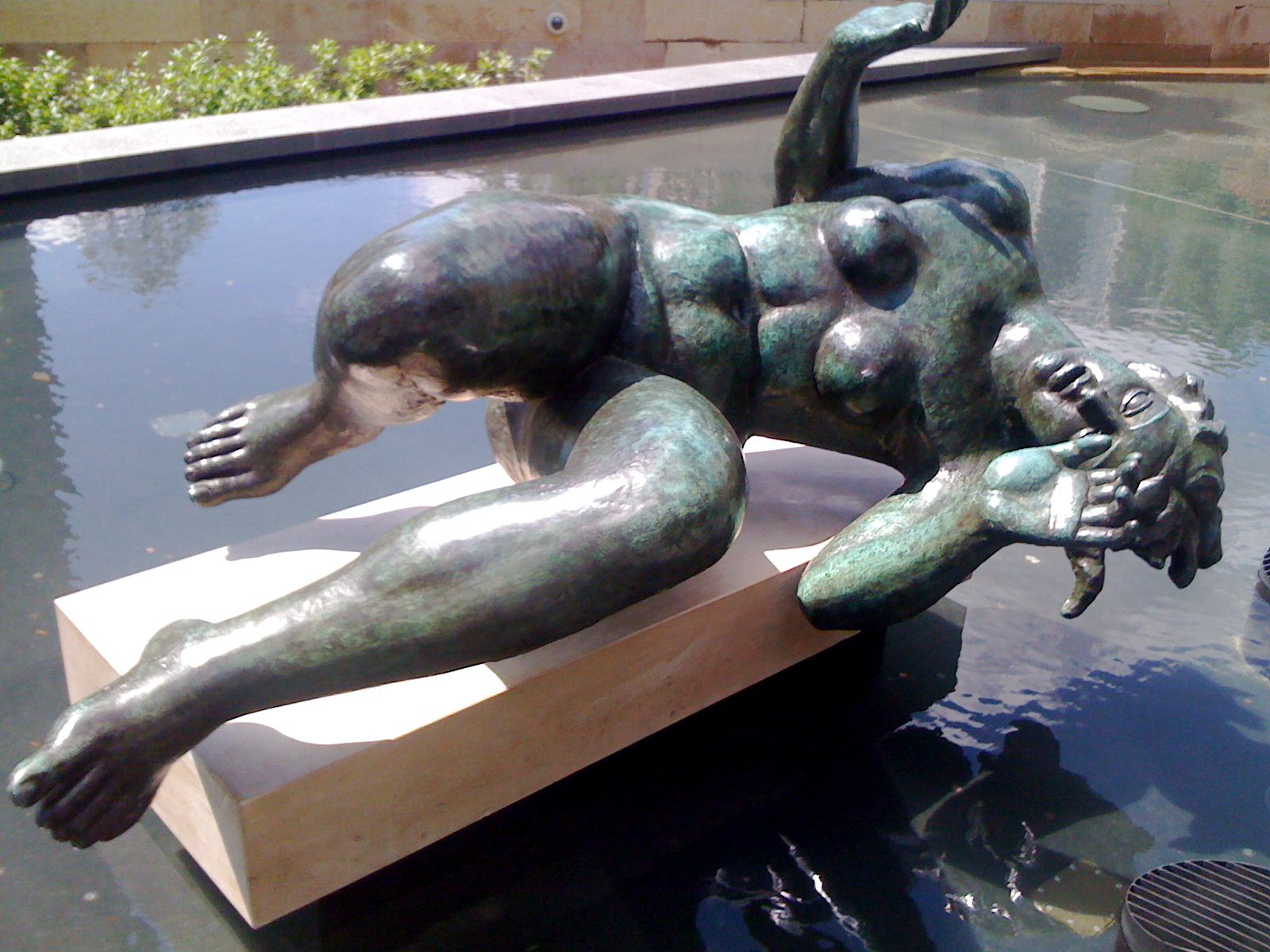
The sculpture is a mixed collection of modern and contemporary works. A bronze woman by Aristide Maillol leans out over the water. An enormous cracked bronze head by Igor Mitoraj lies on the lawn, big enough to sit inside. A set of dancing figures by Keith Haring stands in bright color, and there are many other pieces, some abstract, some playful, spread across both blocks.
Bring a towel if you have children with you, and a change of clothes. The spray plaza is shallow and the jets are low, but nobody stays dry. In summer the fountains run through the day; in colder months they are shut off and the garden turns quiet, good for a slow walk among the sculpture.
Kiener Plaza and the east end
At the east end of the mall, just across Broadway from the Old Courthouse, Kiener Plaza is a broad open square with a fountain, a lawn, a playground and steps for sitting. It was rebuilt in the 2010s and now hosts events and gatherings. From its fountain, the courthouse dome lines up with the Arch behind it, one of the most photographed views in the city.
Mile 0.4Under the dome, a family's case for freedomBetween Kiener Plaza and Citygarden, the mall is broken by streets and buildings, so you weave a little rather than walk a straight line. That is part of its history: the mall was never built to one plan, and each block has its own design and era.
Walking west: Serra and the civic buildings
West of Citygarden, the mall opens into broader lawns. In one stretch stands Richard Serra's large steel sculpture of tall rusted plates, set on the grass and open to walk into. It drew strong opinions when it went up and still does. Walk inside and the city noise drops away.
The buildings along the mall here were the city's civic center. City Hall, with its steep roofs and towers, was modeled on the town hall of Paris. The Civil Courts Building rises to a stepped pyramid roof based on an ancient tomb, with griffins at its corners. The Central Library, a few blocks north on Olive Street, is a grand granite building from 1912; its reading rooms have been restored and are worth a look when it is open.
Soldiers Memorial
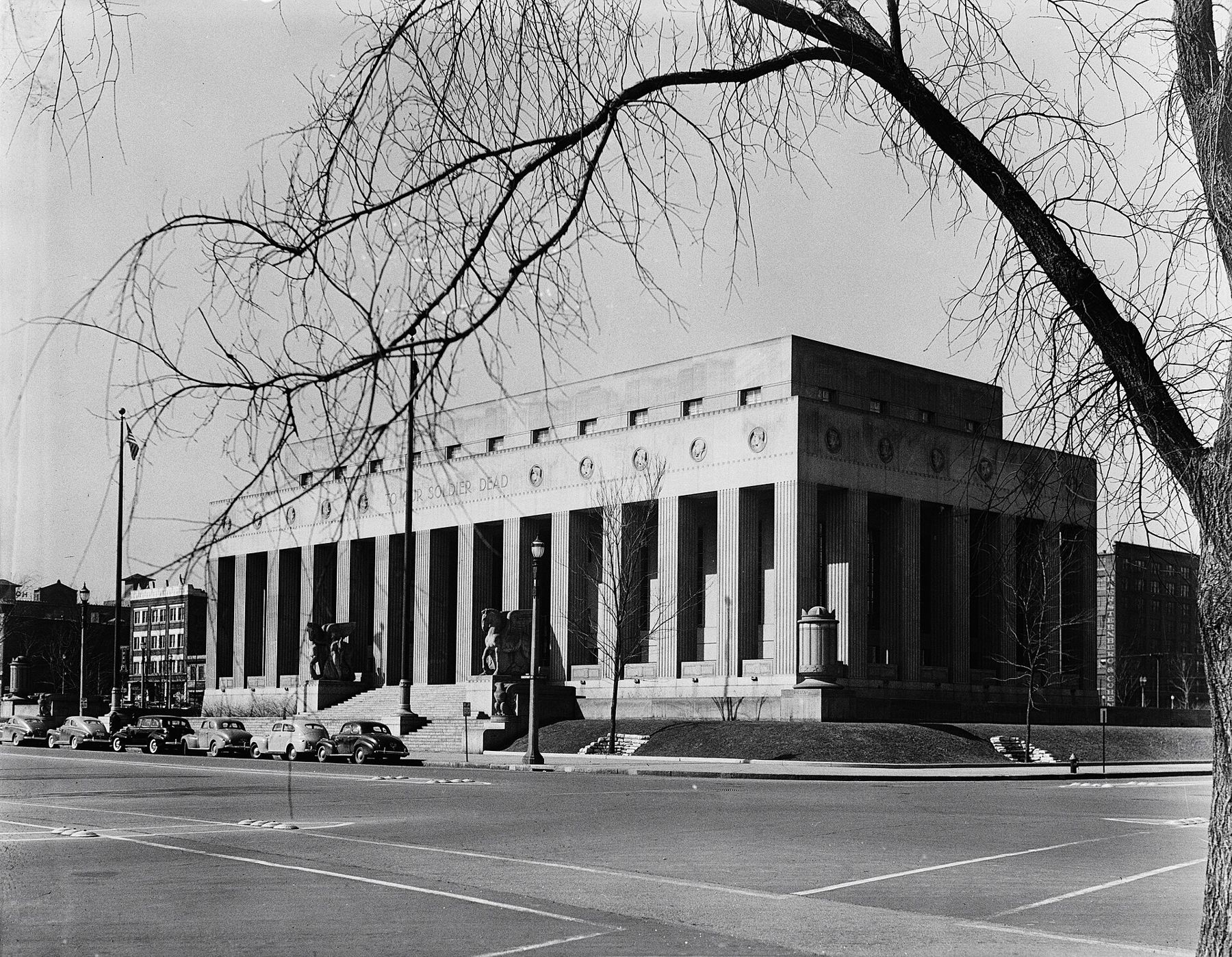
On the north side of the mall, on Chestnut Street near 14th, stands Soldiers Memorial, a stern stone building dedicated in 1938 to the city's dead of the First World War. Big carved figures guard its entrances, and the open loggia between the two wings has a mosaic ceiling. Inside is a military museum, reopened after a long renovation; check what is open before you go.
Across Chestnut Street, the Court of Honor remembers the city's dead of the Second World War and later conflicts, with a long wall of names and a fountain. Together, the memorial and the court form the quietest part of the mall.
Practical notes
The whole mall, from Kiener Plaza west, is a little over a mile long. Most people walk the east end to Citygarden and then pick and choose. The ground is flat and the paths are paved; benches and shade are best in Citygarden and around the memorial.
Downtown is busiest on weekdays during work hours and on game and event nights. On quiet weekend mornings the mall can feel empty. As in any downtown, keep to well-used paths after dark and use the usual city sense. The 8th & Pine MetroLink station is two blocks from Citygarden, and the Civic Center station sits near the west end.
Where it leads
Go east and the mall ends at the Old Courthouse, where Dred and Harriet Scott sued for freedom, with the Arch beyond. Go west and you come out near Union Station and its fountain at Aloe Plaza, a little under a mile on. North a few blocks is City Museum, which suits the same children who soaked themselves in Citygarden's spray plaza.
The mall is at its best in late spring and summer, when the fountains run and the trees are full. A few civic events, races and parades use it, and on those days the lawns fill. Check the city's event listings if you want it quiet, or if you want the crowd.