South of the line · Shaw
Henry Shaw's garden and the park he gave the city
A Victorian merchant's garden that grew into a research institution, a geodesic dome full of rain forest, and a strolling park of painted pavilions just across the road.
A merchant's garden
Henry Shaw came to St. Louis from England as a young man, made a fortune selling hardware to a frontier town that was growing fast, and retired early. He spent the rest of his life on a single project: a botanical garden on his country estate southwest of the city. He opened it to the public in 1859, which makes the Missouri Botanical Garden one of the oldest botanical gardens in continuous operation in the United States.
The garden kept growing after Shaw died. Today it covers a large parcel of land in the neighborhood that carries his name, with display gardens, research greenhouses, and a herbarium of preserved plant specimens that botanists consult from around the world. You do not need any of that to enjoy it. The garden is, first of all, a place to walk slowly through well-tended ground, in all four seasons.
Shaw's own house still stands on the grounds, a handsome brick villa he built as a country retreat, furnished as it might have been in his day. Near it is the mausoleum where he is buried, among the plantings he laid out.
The Climatron
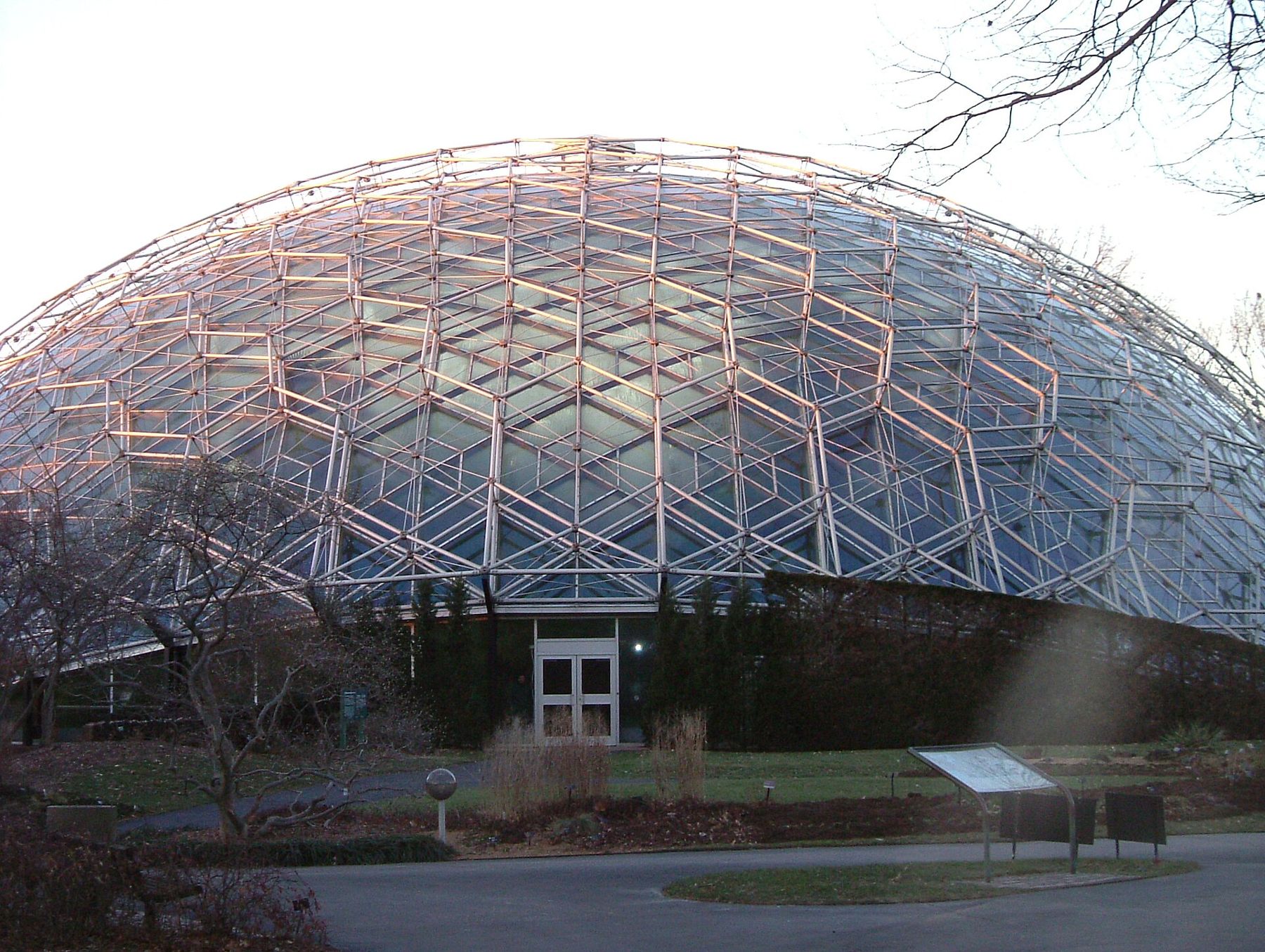
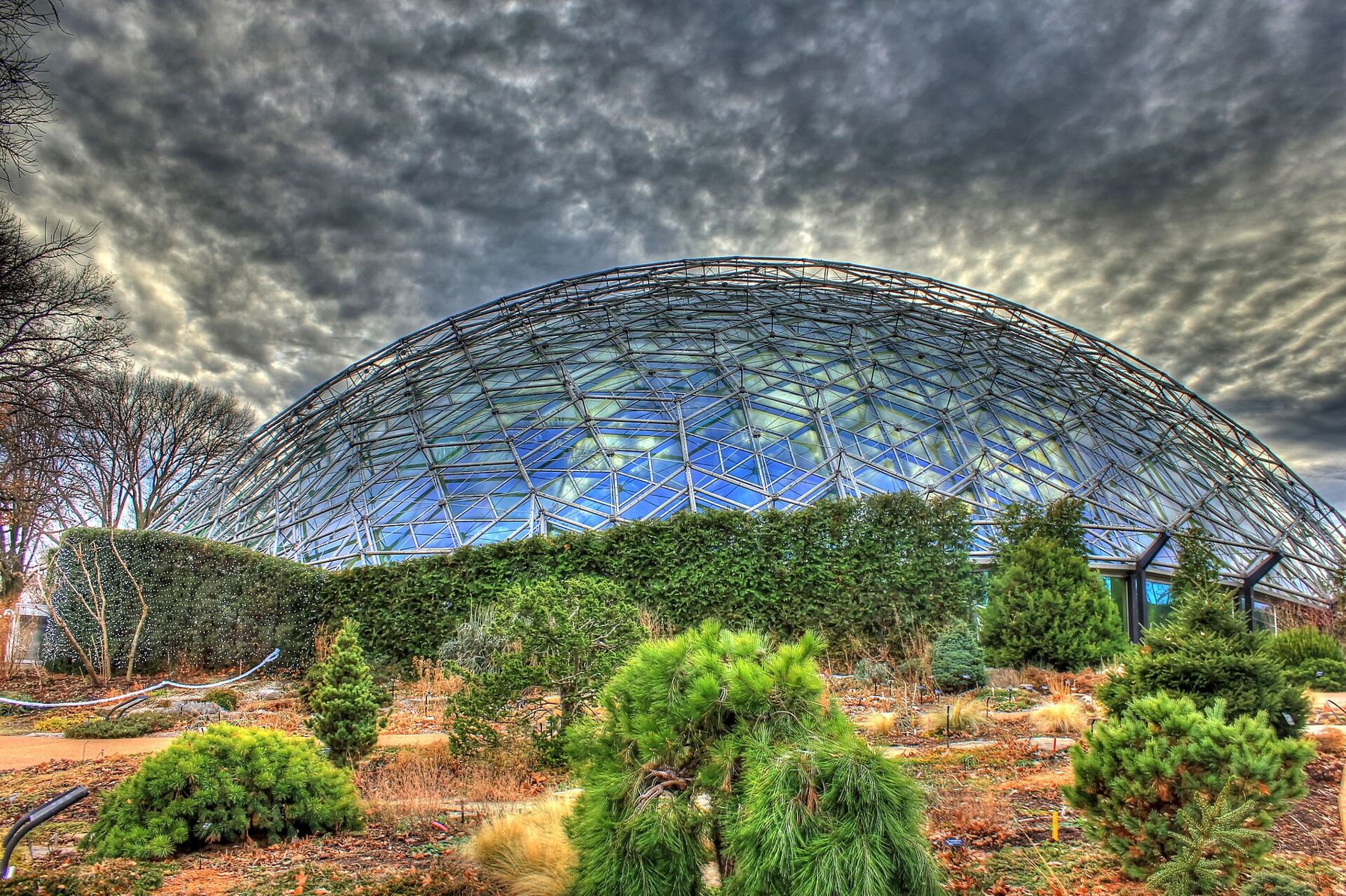
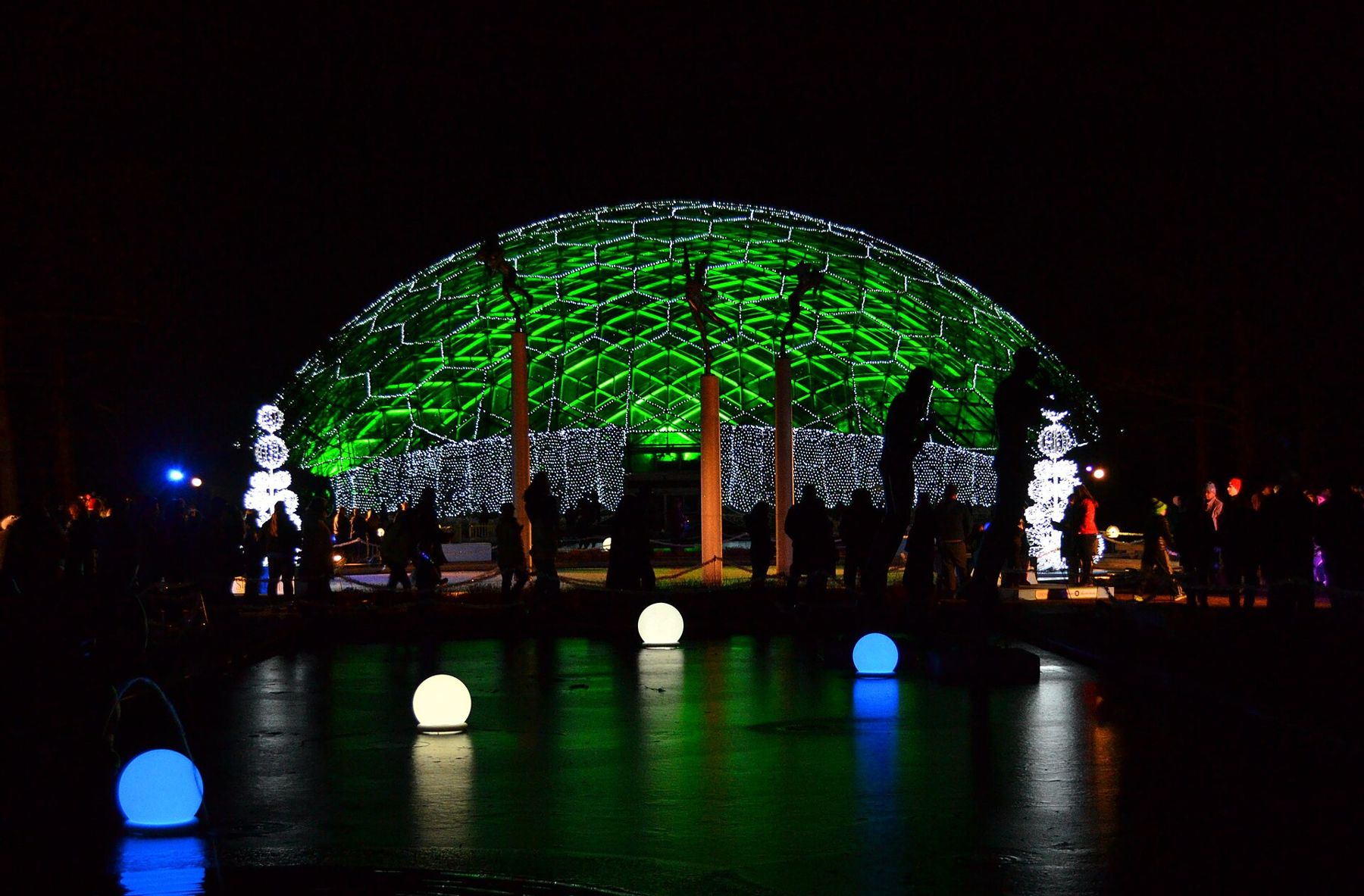
The garden's most famous building is not Victorian at all. The Climatron opened in 1960, a low geodesic dome of aluminum struts and glass panels based on the structural ideas of Buckminster Fuller. It was among the first geodesic domes used as a conservatory, and it still looks startling: a silver web set down among the old trees and lawns.
Inside, the air is warm and damp, and a tropical rain forest grows to the top of the dome with no columns to block it. A path winds past waterfalls, pools and big-leaved plants, with orchids and bromeliads tucked into the trees. On a February afternoon, the change of climate from the frozen garden outside is the point. On an August afternoon it can be overwhelming, and a short loop is enough.
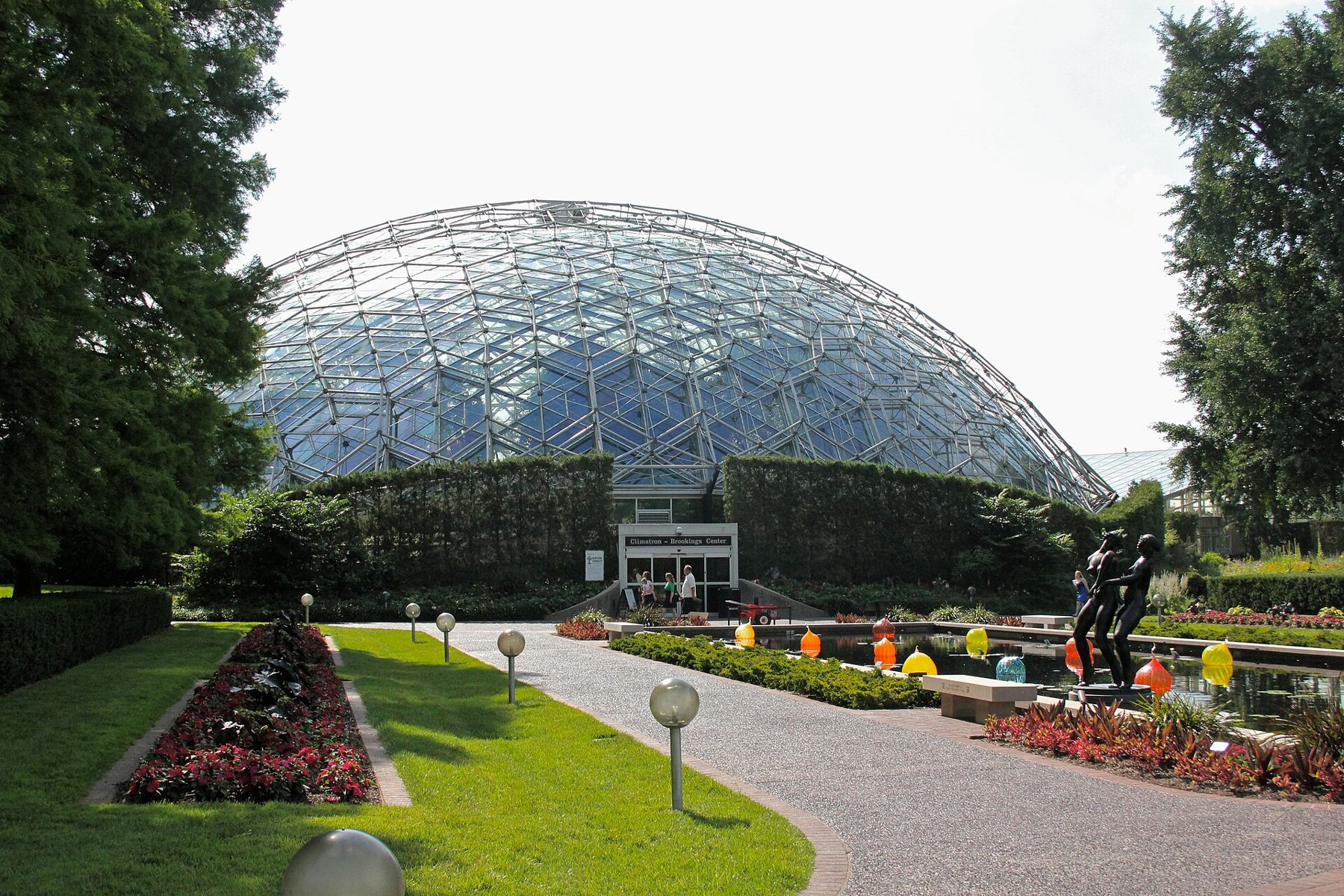
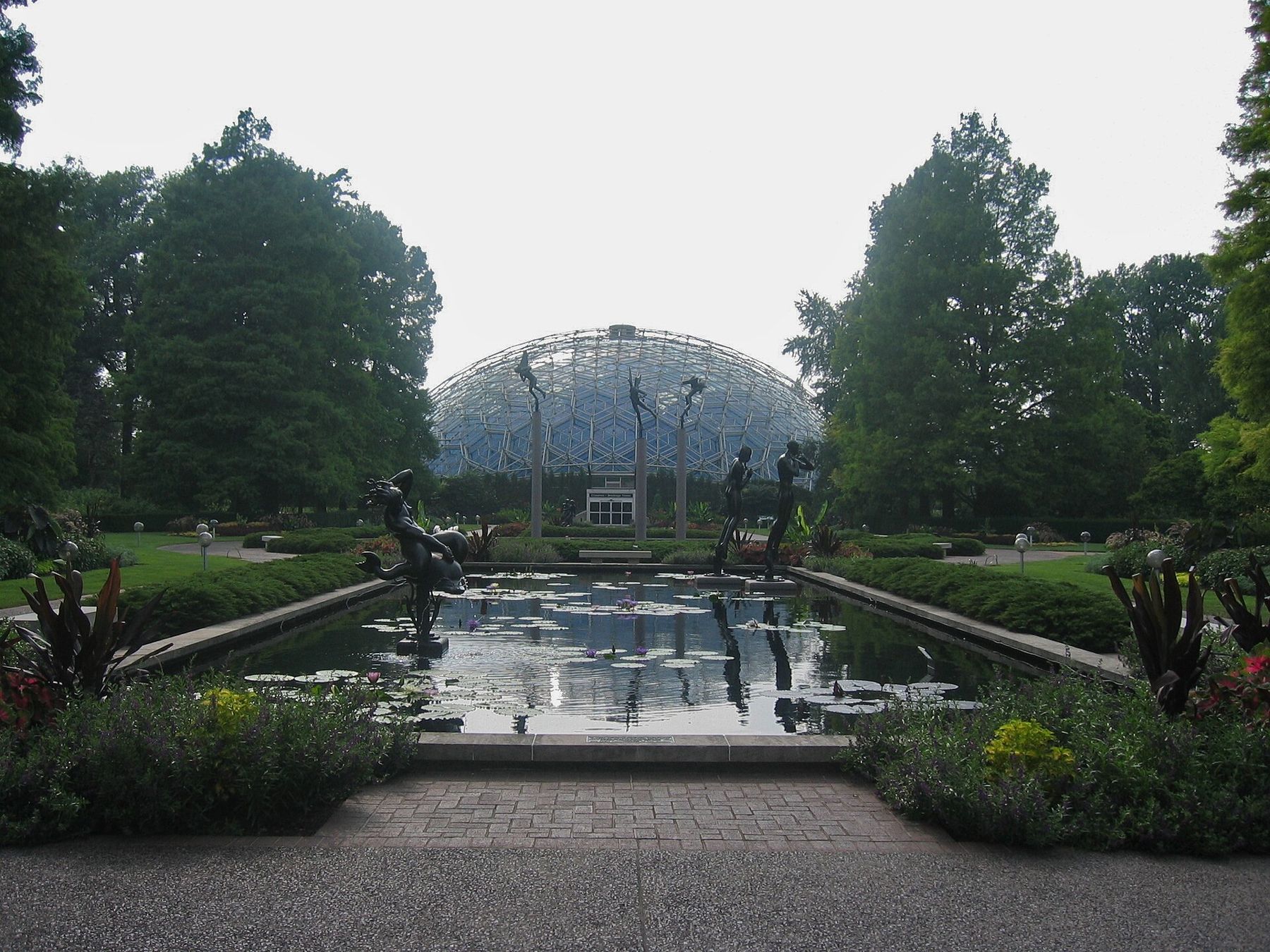
Pools and lawns outside the dome are planted with water lilies in summer. The reflections of the dome in the water make one of the best views in the garden, especially toward sunset when the struts catch the light.
The Japanese garden and other walks
The largest single display is the Japanese garden, laid out around a lake with islands, bridges, raked gravel and lanterns. The paths circle the water so that each turn opens a different view, and the planting changes with the seasons: flowering trees in spring, iris along the water in early summer, maples turning red in autumn. Large koi gather near the bridges.
Beyond it the garden is divided into many smaller sections: a Victorian district near Shaw's house, with a hedge maze and an old greenhouse; a Chinese garden; a German garden; rose gardens; and long beds of herbs and vegetables. A children's garden has had its own fee and hours.
Each season moves the center of gravity. In early spring the crowds gather under flowering cherries and around the bulb beds; by June the roses and the water lilies take over; in high summer the shade of the old trees near Shaw's house is worth more than any flower. Autumn brings the maples and the chrysanthemums, and in winter the bare structure of the gardens shows how carefully the paths and sightlines were laid out. Benches are spread generously along the walks, and the garden is a place where sitting still is part of the visit.
The garden puts on large seasonal events, including a winter light show in which the Climatron and the paths are lit after dark.
Tickets, hours and getting there
Unlike the institutions in Forest Park, the Botanical Garden charges general admission, with reduced rates for residents of St. Louis city and county and free periods on some days. Those arrangements and the opening hours change, so check before you go.
The garden sits south of Interstate 44 in the Shaw neighborhood, about 3.6 miles southwest of the Arch. No MetroLink line runs past it. Buses run along Grand Boulevard and nearby streets, and connect with the MetroLink at Grand station to the north. Many visitors simply drive; the garden has its own parking.
The surrounding streets are worth a look in themselves. The Shaw neighborhood is a dense grid of red brick houses and flats built in the late nineteenth and early twentieth centuries, with stone trim, iron railings and corbeled cornices. Walking a few blocks from the garden to Tower Grove Park takes you through some of the best of it.
On a February afternoon, the change of climate from the frozen garden outside is the point.
Tower Grove Park
Shaw also gave the city a park. Tower Grove Park lies just south of the garden, a long rectangle of lawns and trees that he laid out as a Victorian strolling park and donated in the late 1860s. It remains one of the finest preserved Victorian parks in the country.
The park is known for its pavilions: a dozen or so small shelters in fanciful styles, painted in bright colors, with names that suggest their inspirations, from Chinese and Turkish to Moorish and Gothic. They were built for picnics, music and shade, and they still get used for all three. Near the middle of the park, a cluster of stone ruins built from salvaged pieces of a demolished building stands beside a pond, a deliberately romantic scene in the Victorian manner.
Statues of figures Shaw admired stand along the main drive, and a music stand hosts summer concerts. On Saturdays in the warm months, a farmers market sets up on the park grounds.
Walking the park
A walk down the main drive from one end of the park to the other, past the pavilions and the ruins, takes about an hour at an easy pace. The edges of the park are lined with substantial old houses in brick and stone, on streets laid out with the park in mind.
Fitting it into a trip
The garden and park make a full day. Arrive at the garden in the morning, before summer heat builds, and leave the Climatron for the middle of the day or for a cold afternoon. Walk south into Tower Grove Park for a late lunch in the shade, then continue east toward the neighborhoods south of downtown, such as Soulard and Lafayette Square.
From the garden, it is a short drive back north to Grand Center and its theatres. Spring brings the flowering trees and the iris; autumn brings color in the Japanese garden. The winter light show makes December worth a visit too.