Midtown and the Central West End · Central West End
Forty million pieces of glass and gold
From outside, a heavy granite church on Lindell Boulevard. Inside, nearly every curve of ceiling, dome and arch glows with mosaic, laid piece by piece over most of the twentieth century.
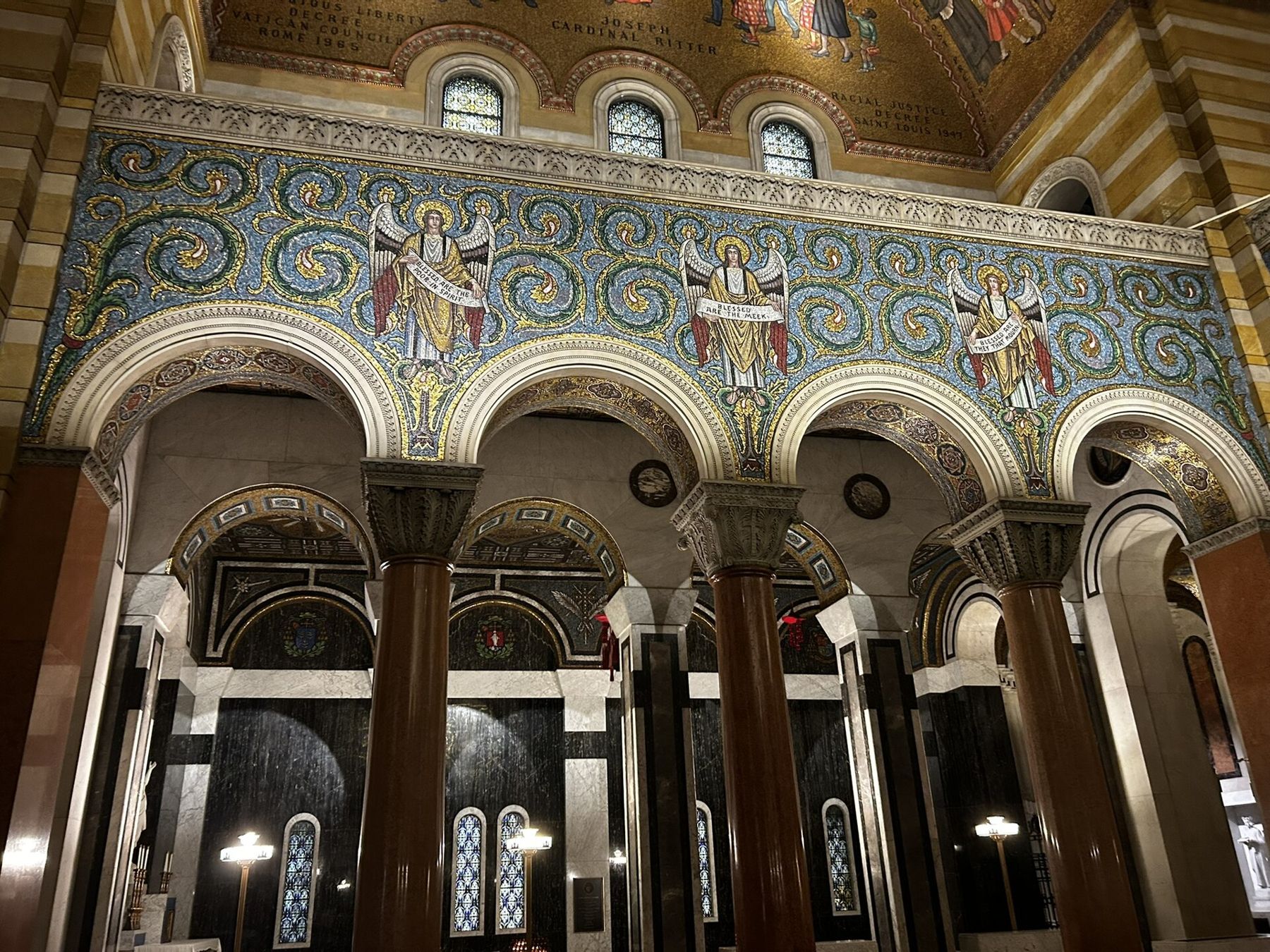
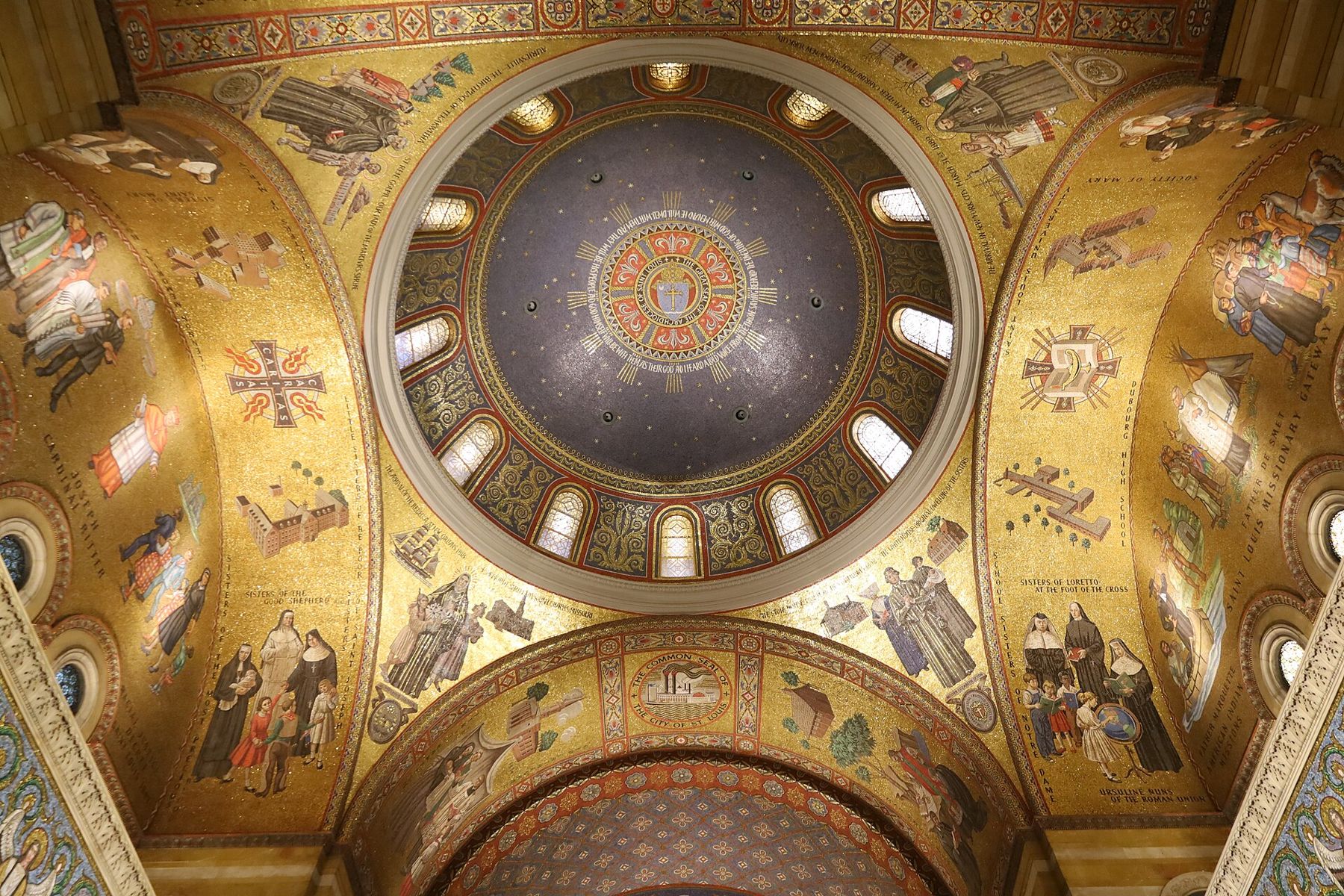
On Lindell Boulevard at Newstead Avenue stands a church that looks, from the sidewalk, sturdy and a little stern: gray granite, round arches, two square towers and a broad green dome. Go inside and the impression changes completely. The Cathedral Basilica of Saint Louis holds one of the largest collections of mosaic art in the world, and almost every curved surface overhead is covered in it.
The church was begun in 1907 and dedicated in 1914, replacing the Old Cathedral on the riverfront as the seat of the archdiocese. Its plan follows a Byzantine model, with a great central dome over the crossing and smaller domes and half-domes around it. The mosaics came later, installed in stages from 1912 to 1988, by several studios and artists working over more than seven decades.
The outside gives little warning of what waits inside. The granite is rough and gray, the arches are heavy, and the two towers on the front are plain. Walk around the block and you see the shape of the plan: a broad central mass under the dome, with chapels pushing out from its sides, all built to hold a very large room with as few columns in the way as possible.
The mosaics
Altogether, the mosaics cover roughly 83,000 square feet and contain more than 41 million small pieces of glass, called tesserae, in thousands of colors. Many have gold leaf fused into the glass, so the ceilings shimmer as the light shifts. The styles change as you move around the building, since different parts were made at different times, from early pieces in a dense Byzantine manner to later ones that are flatter and more modern.
Setting the pieces was slow, skilled work. Craftsmen pressed each small square of glass into wet mortar by hand, following full-size drawings, and a single figure could take weeks. Many of the artisans came from Europe, and some spent much of their working lives on this one building. Knowing that changes how you look at the walls: every patch of gold is thousands of separate decisions.
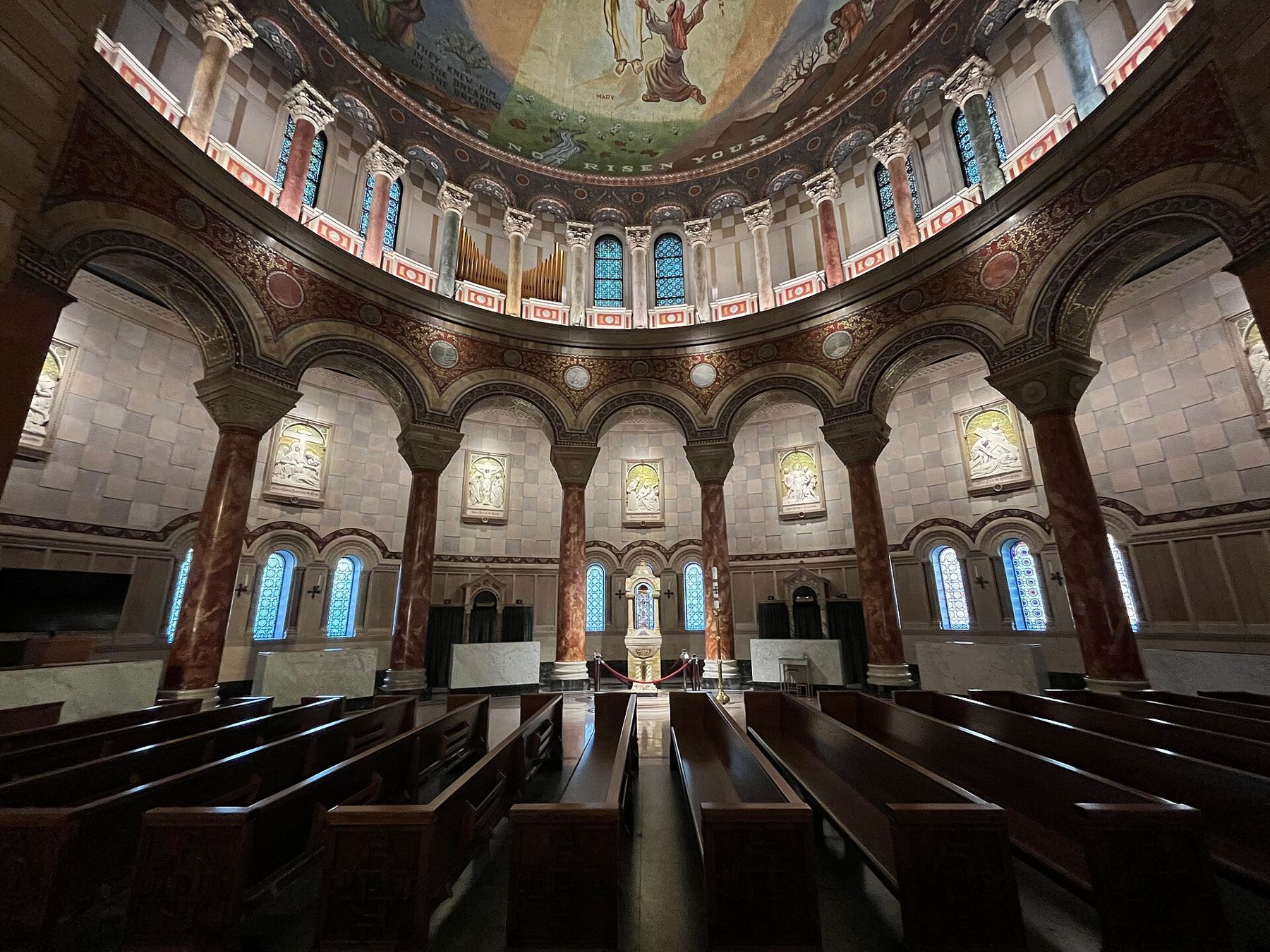
The subjects run through the Old and New Testaments and through the church's history in St. Louis. Look for scenes from the life of Saint Louis, the French king for whom the city is named; for the story of the founding of the diocese; and for the angels, prophets and saints on the arches.
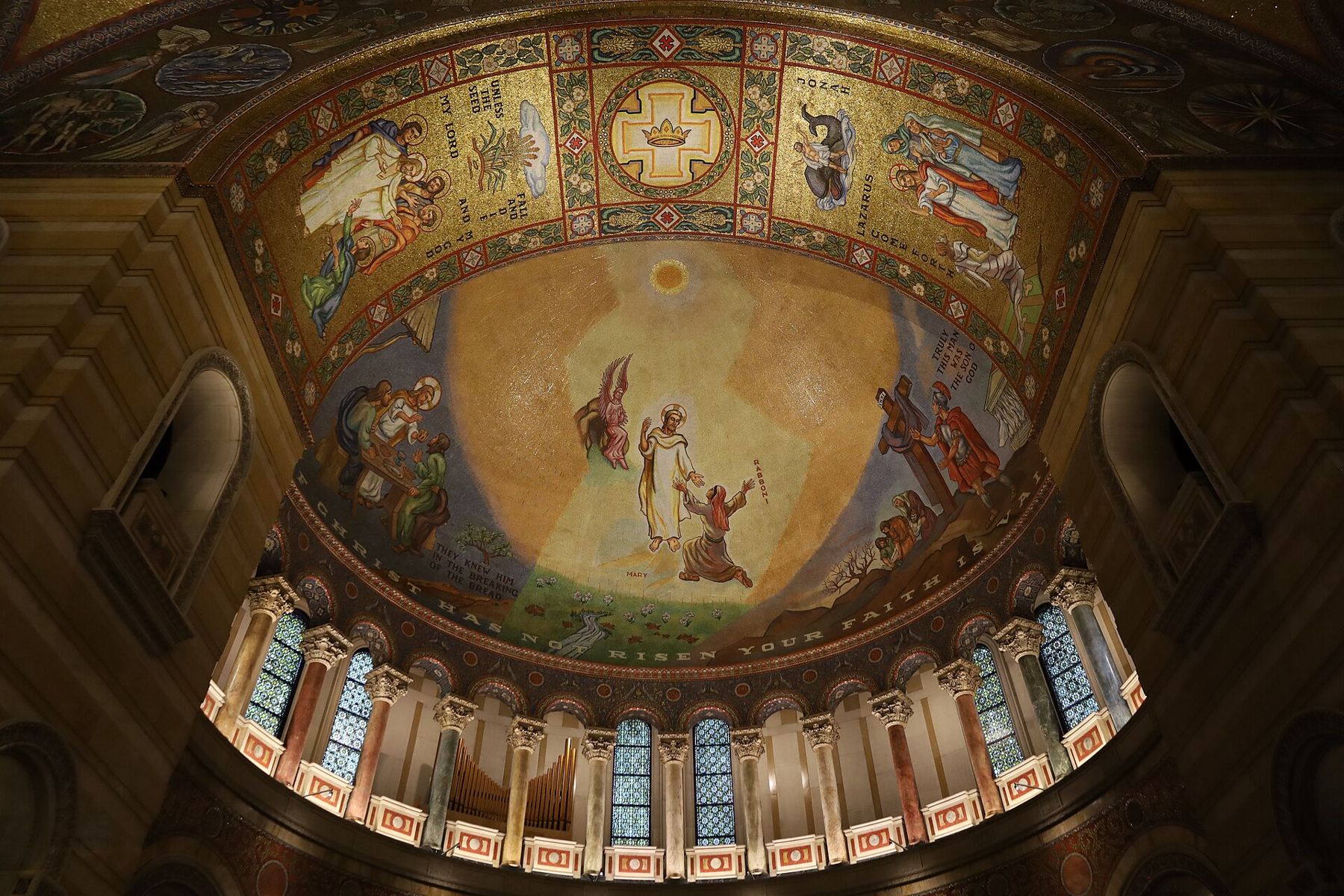
The central dome is the high point. Stand directly under it and look up: the colors spiral into the gold at the top, and the light from the ring of windows at its base gives the whole thing a lift. Binoculars help here. The details at the top are too far to see well with the naked eye, and it is worth a slow look rather than a quick one.
The side chapels and the mosaic museum
Around the main space, smaller chapels each have their own mosaic programs, some of the finest work in the building. Their scale is closer, so you can see how the tesserae are set, tilted slightly so they catch light at different angles. Some chapels are used for daily prayer, so walk quietly and give space to anyone praying.
Mile 4.2Gates, mansions and the walk to the park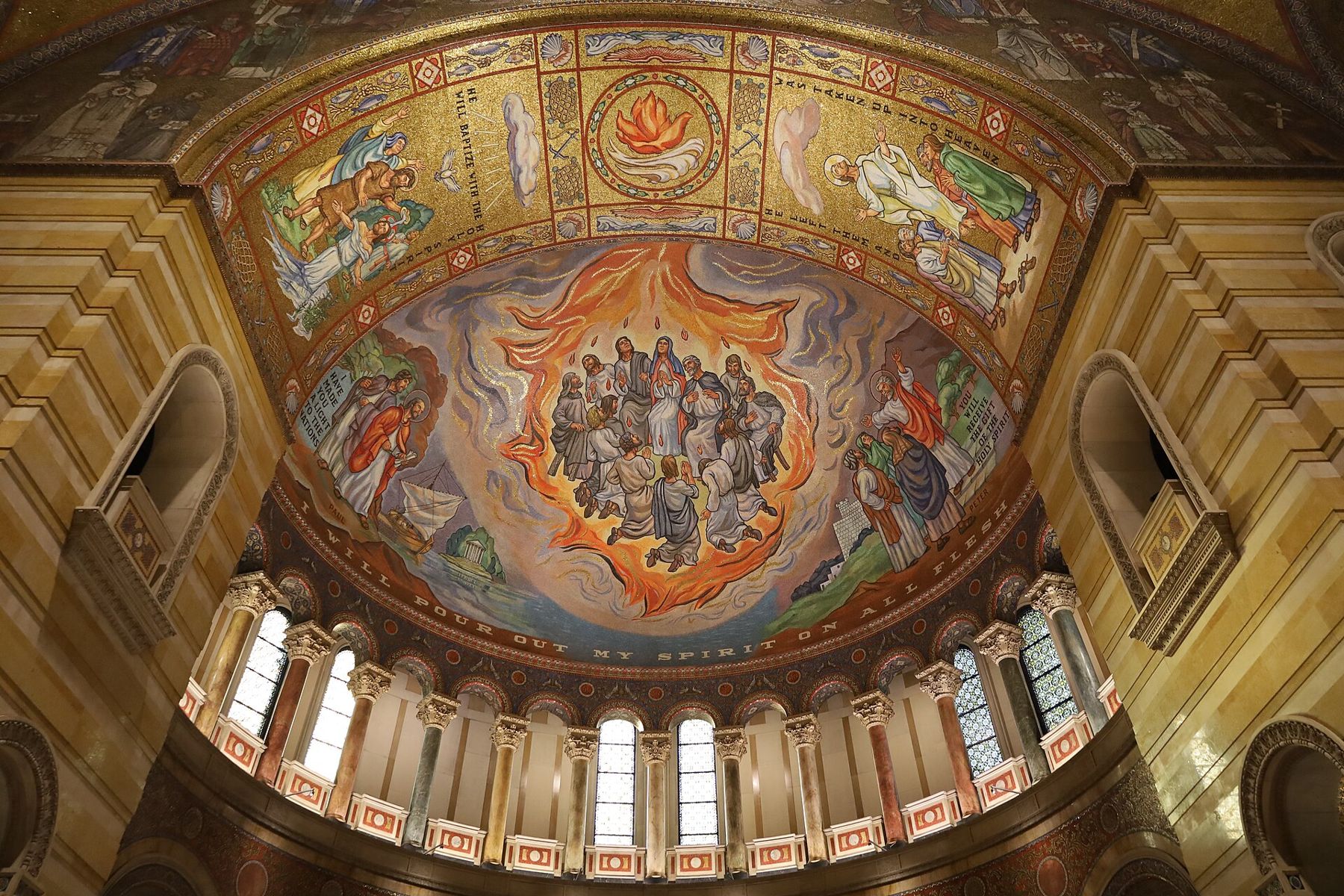
On the lower level, a small museum explains how the mosaics were made, with tools, samples and photographs of the installation. It is the best place to understand the scale of the work, and it may carry a small charge. The main church has usually been free to enter, with donations welcome. Tours have been offered on some days; check before you go.
Pope John Paul the Second visited in 1999, and the church was given the title of basilica in 1997. Both events are marked inside.
Visiting respectfully
This is a working cathedral and a place of worship first. Masses, weddings, funerals and other services take place throughout the week, and during them visitors are asked not to wander or take photographs. Mass times, opening hours and photography rules change; look them up before you go, especially on a weekend or holy day.
This is a working cathedral and a place of worship first.
Dress modestly, with shoulders covered, and keep your voice down. Turn your phone to silent. If a service begins while you are inside, either take a seat and stay quietly, or leave by the side door. Flash photography is generally discouraged because it bothers worshippers more than it helps the photo; the mosaics photograph better in natural light anyway.
When to go
Weekday mornings outside service times are the calmest, and the light through the windows is good. Late afternoon brings a warmer cast to the gold. Weekends are busier, with weddings often filling Saturdays. Big feast days, especially Christmas and Easter, fill the church for services, which is moving to see but not the time for a slow look at the ceilings.
The building is the same in any season, which makes it a good winter visit, when the walk through the Central West End is cold but the cathedral is warm and lit.
Give yourself at least an hour. Most people walk in, stop under the dome, and stay longer than they meant to. A good order is to start at the back, walk slowly up one side aisle through the chapels, stand under the central dome, look into the sanctuary, and then come back down the other side. Sit for a while in a pew partway down the nave; from there the half-dome over the altar and the main dome line up, and your eyes have time to adjust to the dim gold light.
Getting here and what's nearby
The Central West End MetroLink station is about a mile southwest. You can walk up Euclid Avenue through the neighborhood, past its shops and sidewalk tables, and turn east on Lindell. Buses also run along Lindell and Kingshighway. Street parking is limited near the church on busy days.
Pair the visit with a walk around the Central West End, whose old houses and private streets begin just west. Going east along Lindell brings you to Grand Center and its theaters. And if the mosaics leave you curious about the city's churches, the much older Old Cathedral by the Arch is a short train ride away, a plain stone church of 1834 that this building replaced as the seat of the archdiocese.