The museum at the top of Art Hill
Cass Gilbert's Palace of Fine Arts outlived the 1904 World's Fair and still holds the city's art, with a crusader king on horseback guarding the slope below.
A fair building that was meant to stay
Almost everything built for the 1904 Louisiana Purchase Exposition was temporary. The great exhibition palaces of the fair were mostly plaster and fiber stretched over wooden frames, handsome for a summer and gone soon after. The Palace of Fine Arts was the exception. Cass Gilbert designed it in stone and brick so that it could outlast the fair, and when the crowds left Forest Park the building passed to the city as its art museum. More than a century on, it still stands at the crest of the hill, the one big fair palace you can walk into.
The building faces north, down the long lawn the city calls Art Hill, toward the Grand Basin and the lagoons. Gilbert gave it a broad front of columns and arches, six seated figures and carved inscriptions, and behind the entrance a great vaulted central hall lit from above. That hall is the first thing you meet inside, and it sets the tone: wide, quiet, cool on a July afternoon, with sculpture placed along its length like furniture in a very large living room.
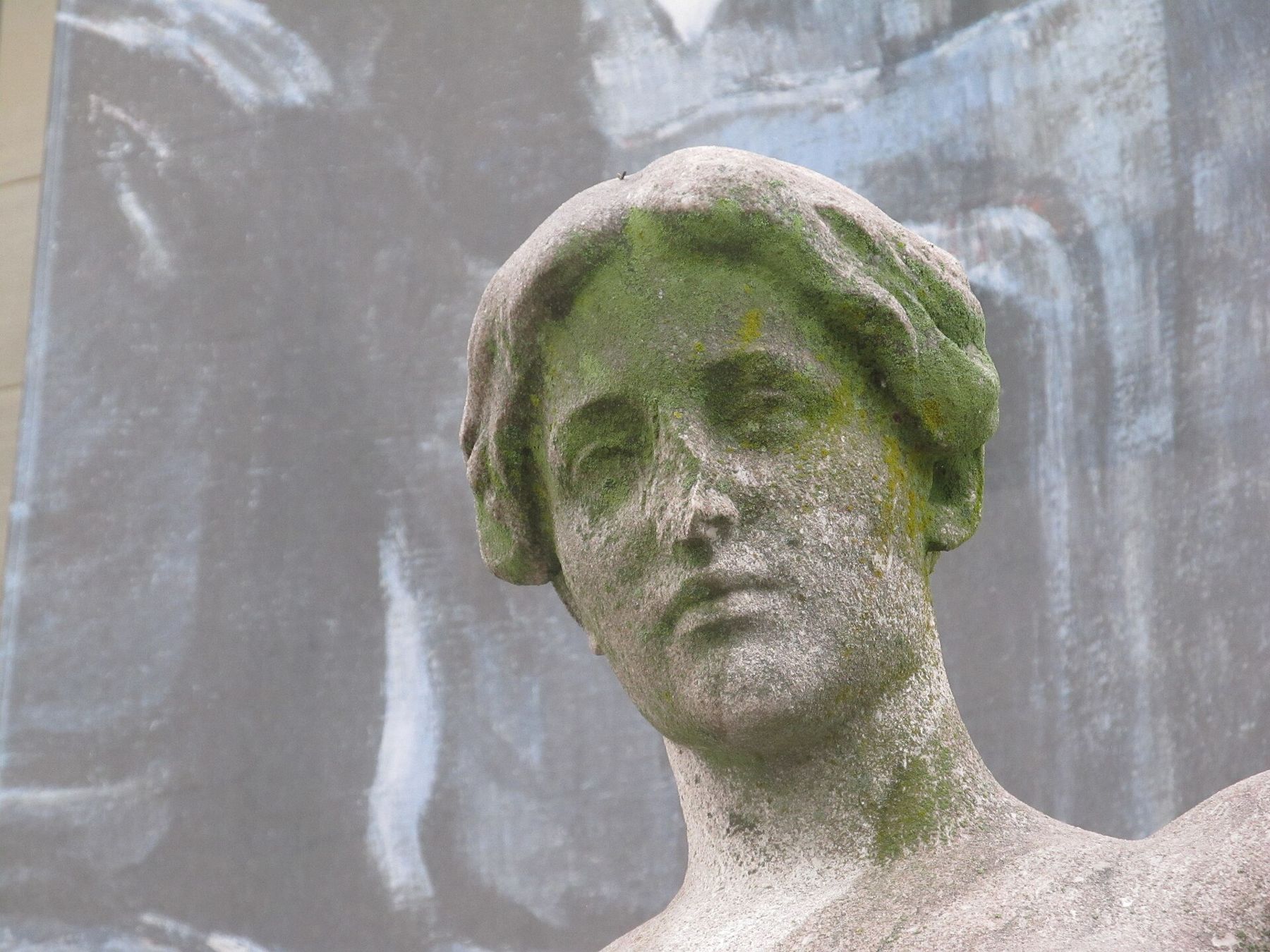
The stone figures along the front represent the arts, and up close they have weathered into something more personal than their makers probably intended.
King Louis IX on the hill
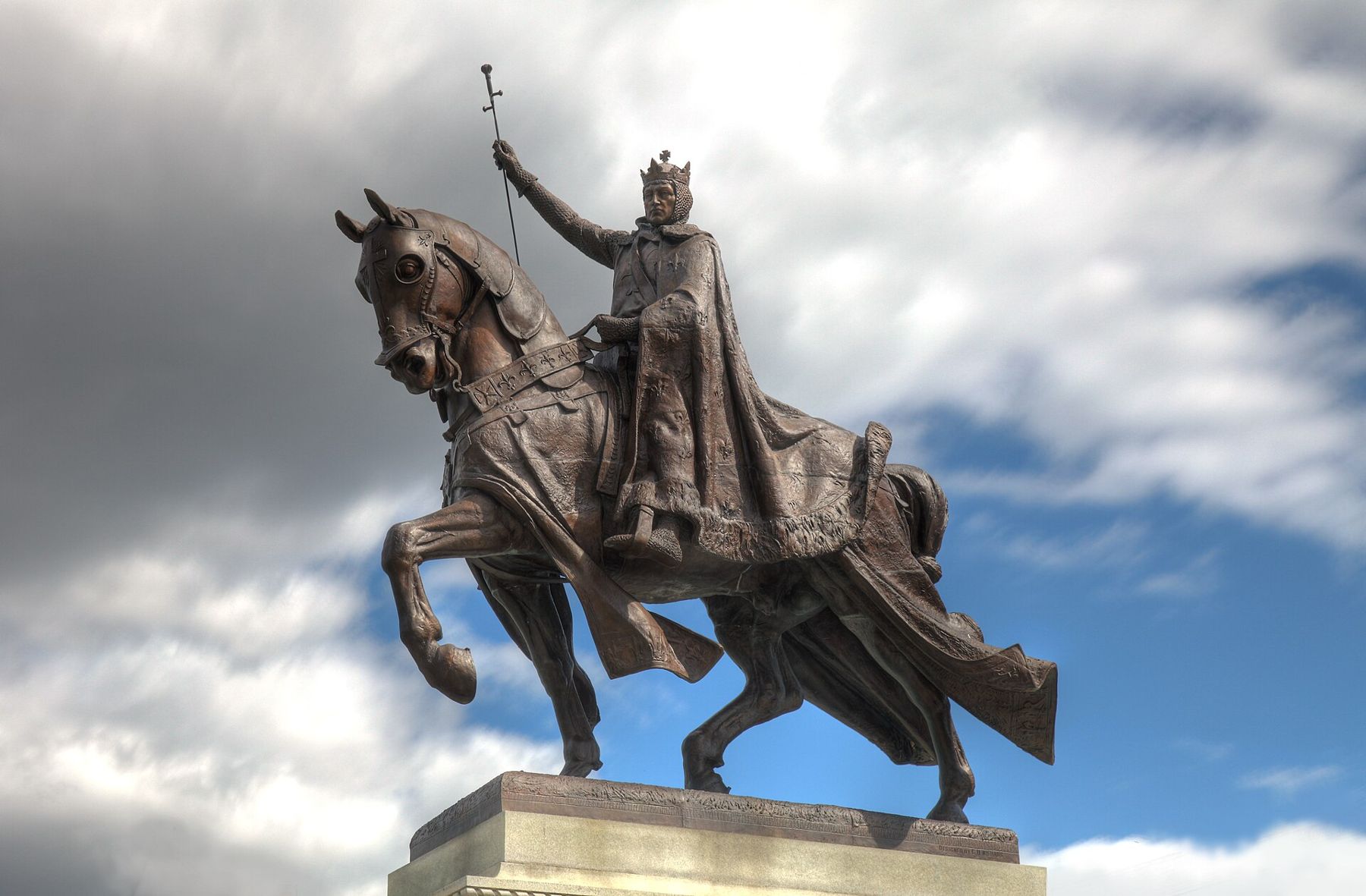
In front of the museum, on a tall pedestal, a bronze knight sits on a horse with his sword raised hilt upward, so that it reads as a cross. This is the Apotheosis of St. Louis, a statue of King Louis IX of France, the crusader king the city is named for. A version of it greeted visitors at the 1904 fair, and the bronze took its place here afterward. For decades it served as the city's emblem before the Arch took over that job, and it still turns up on old badges, postcards and seals.
The statue is worth a slow walk around. From the front, with the museum behind it, the king looks formal and stiff. From the lawn below, against open sky, the horse seems to be stepping off the hill toward the water. Late in the day the bronze picks up a warm light that the stone building behind it does not.
What is inside, in broad strokes
The collections run from the ancient world to work made in the last few years. You will find Egyptian and classical objects, a deep run of Asian art, arts from Africa, Oceania and the ancient Americas, European painting from the medieval period onward, and a strong American collection that includes painters of the Missouri and Mississippi river country. The museum is especially known for its German art of the early twentieth century, including one of the largest holdings anywhere of work by Max Beckmann.
Galleries rotate and pieces travel, so a particular painting you remember may be off view. Rather than chase a checklist, pick two or three departments and give them real time. The building rewards that pace: rooms open into each other in long sightlines, and windows at the ends of galleries let you check where you are against the park outside.
If you came along the line from downtown, the museum makes a natural pair with the mosaics of the Cathedral Basilica: both show the money and ambition the city poured into art in the early twentieth century, one in stone and bronze, the other in millions of small pieces of glass.
Mile 5Around the fairgrounds: a loop of Forest ParkFree at the door, with a few exceptions
General admission to the museum has long been free. That tradition is part of a wider pattern in St. Louis, where the zoo, the history museum and the art museum have been supported by local taxpayers so that anyone can walk in. The words carved on the building, "Dedicated to Art and Free to All," make the point plainly.
Some special exhibitions charge an entry fee, and those shows often come with timed tickets. Hours, closed days and exhibition prices change, so check before you go, particularly on a holiday weekend. Parking is spread across surface lots and a garage near the newer wing; the rules and any charges there are worth checking as well.
The east building
In 2013 the museum opened a large addition to the east, designed by the British architect David Chipperfield. It is low and long, with dark polished concrete walls and big panes of glass, and it sits respectfully beside the old palace rather than competing with it. Many of the modern and contemporary galleries are here, under a ceiling of deep concrete coffers that let in soft daylight.
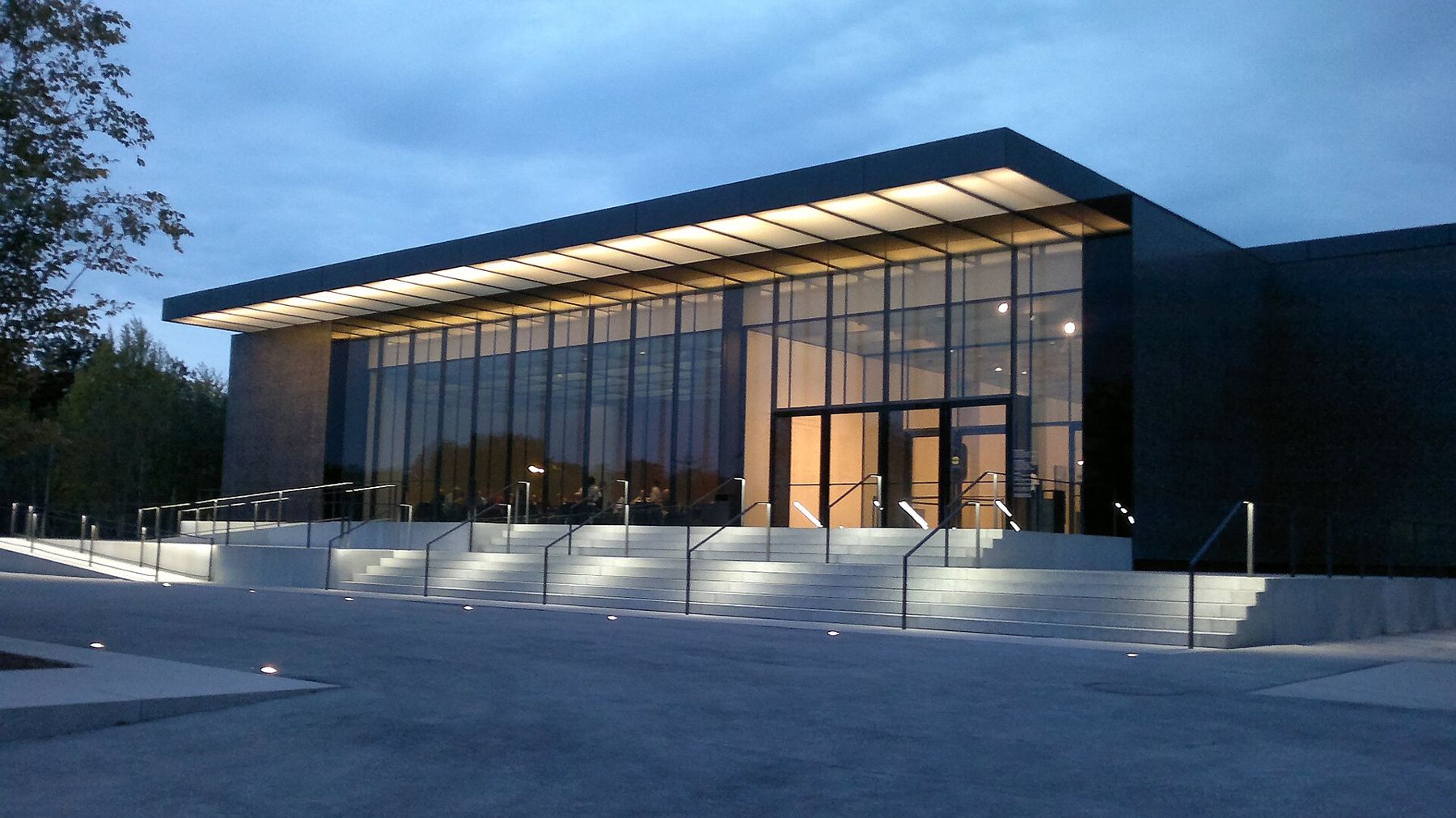
At dusk, when the lights come on, the glass front glows like a lantern and you can see straight through the building to the trees on the other side. The contrast with Gilbert's heavy stone is the best argument for walking all the way around the museum before you leave.
Art Hill in every season
The lawn in front of the museum is one of the most used slopes in the city. In summer people spread blankets on it for outdoor film nights and concerts, and on any fine evening there are runners doing hill repeats and families rolling down sideways. When enough snow falls, Art Hill becomes the city's sledding run, and the bottom of the slope near the Grand Basin fills with kids, plastic sleds and parents holding hot drinks.
From the top, beside the statue, you look straight down the hill to the water of the Grand Basin, where fountains play in warm months. It is a good place to orient yourself in a park that is larger than New York's Central Park and easy to get turned around in. The Saint Louis Zoo lies through the trees below, and the Muny and the Jewel Box are a pleasant walk away.
Getting up the hill
The nearest MetroLink station is Forest Park-DeBaliviere, on the park's northeast edge, and from there it is a long but flat walk across the park and then a climb; allow a good half hour on foot. The ride out along MetroLink from downtown is simple enough, and in some seasons a park shuttle has run between stops in Forest Park; check what is operating before you count on it. If you drive, the museum's lots sit behind the building, on the level ground at the top, so you can skip the stairs entirely.
Give yourself the climb at least once, though. Coming up Art Hill on foot, with the king on his horse slowly rising into view and the palace behind him, is the way the fair's designers meant the building to be seen.