South of the line · Soulard
Soulard's market and the houses round Lafayette Park
Two neighborhoods just south of downtown: a market with roots in the late 1700s and brick streets with French names, and a ring of painted Victorian houses facing an old public park.
Just south of downtown
A mile or two south and west of the Arch, on the far side of the highway interchanges, the city changes texture. The towers give way to two-story brick houses with stone steps, narrow streets lined with trees, and corner buildings with storefronts at street level and apartments above. Soulard and Lafayette Square are side by side here, and they make a good half day on foot, especially on a Saturday morning when the market is busiest.
Soulard Market
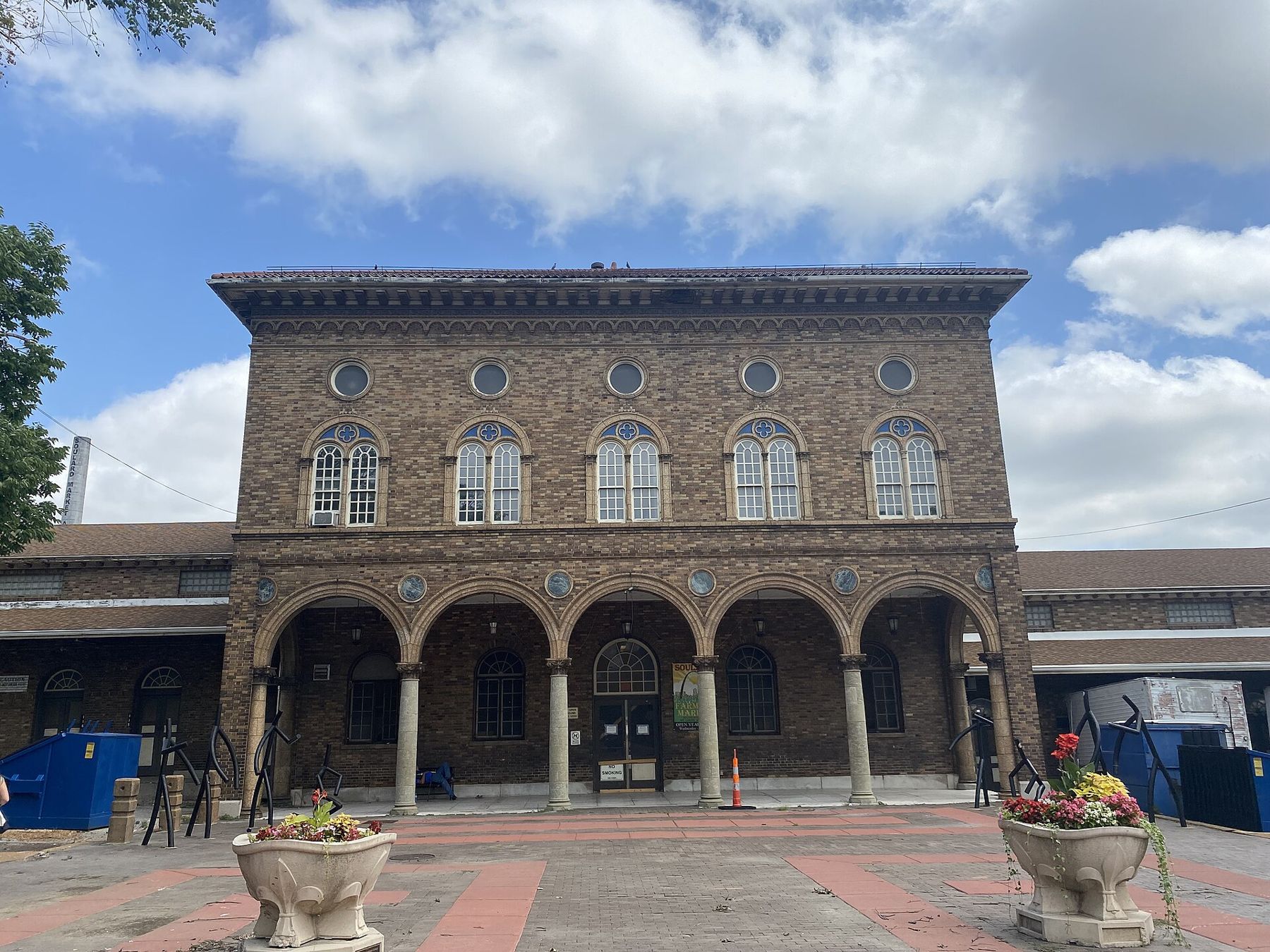
A market has operated on this site for a very long time. Farmers were selling produce here by the late 1700s, when St. Louis was still a small French town, and the ground was later given to the city for use as a public market. The current market building dates from 1929. Its center is a two-story brick structure in an Italian Renaissance style, with an arcade of arches and round windows across the front, and long sheds stretch out on either side.
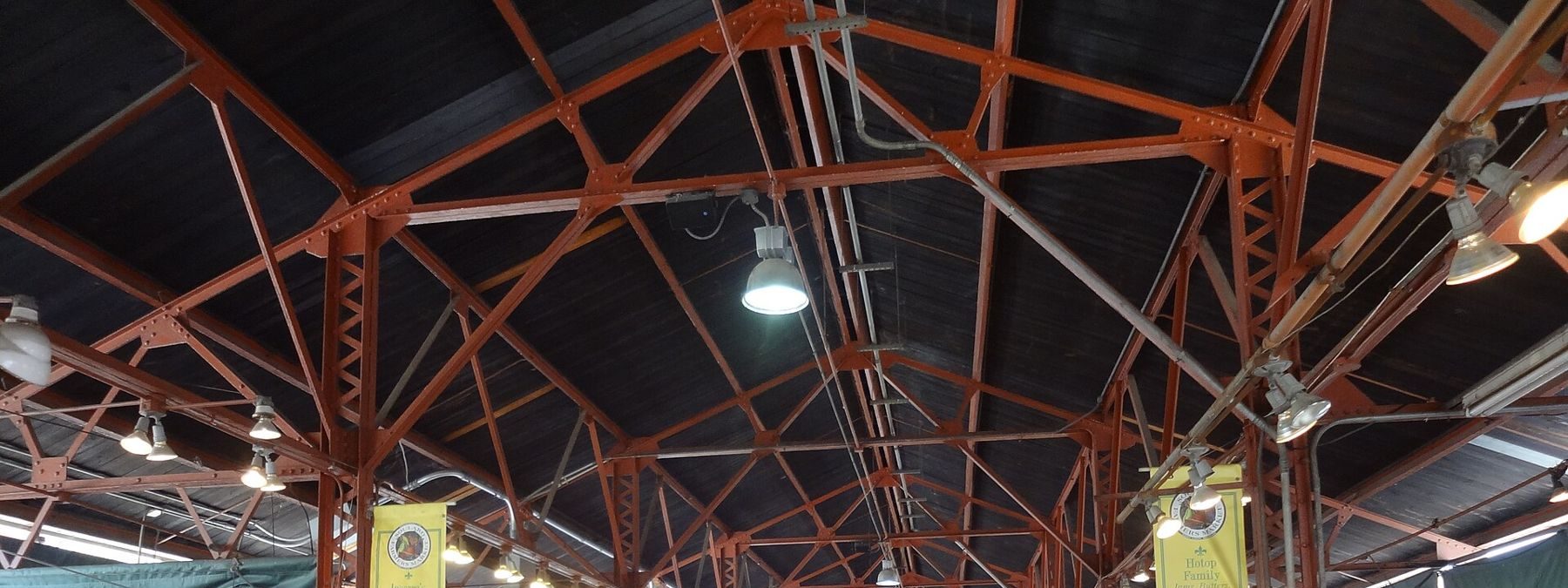
Under the sheds, stalls sell fruit and vegetables from farms in Missouri and Illinois, as well as meat, fish, spices, flowers, baked goods and prepared food. Saturday is the big day, when the aisles fill early and the produce is stacked high in crates and baskets. Weekdays are quieter, and some stalls keep their own hours. Days and opening times change, so check before you go.
The market is a good place to try local food in general. You will find gooey butter cake, the dense, sugary St. Louis sweet, along with smoked meats and seasonal produce. The neighborhood around it is known for its taverns and for food in the German, Irish and Cajun traditions, reflecting the people who settled here.
The neighborhood's French names
Soulard takes its name from Antoine Soulard, a French surveyor who mapped land for the Spanish colonial government when St. Louis was part of Spanish Louisiana. He owned land in the area, and his widow later gave a parcel for the market. Other street names in the area recall the French colonial period, a reminder that the city was founded by Laclède and Chouteau in 1764 and was French in speech and custom long after the Louisiana Purchase.
Most of the houses date from the 1800s. Many were built for German, Bohemian and Irish immigrants who worked in the breweries, factories and rail yards nearby. Look for flounder houses, an old St. Louis type with a single sloping roof, built with one side windowless as though waiting for a neighbor. The neighborhood's red brick houses were built close together, with tiny yards behind and doors right on the street.
All over the cityA city made of its own groundMardi Gras and other gatherings
Soulard is known for its Mardi Gras celebrations, among the largest in the country. Over several weeks before Lent there are parades, a pet parade, music and street parties, and on the biggest day the streets fill with crowds. If you visit then, expect road closures, limited parking and plenty of drinking in the streets; the atmosphere is festive but noisy. If that is not for you, come on another weekend.
The neighborhood's bars and music venues draw crowds year-round, especially on weekend nights. As in any busy entertainment district, keep an eye on your belongings and stay on well-lit streets late at night.
Lafayette Square
A short walk northwest of Soulard brings you to Lafayette Square, a neighborhood of grand Victorian houses facing Lafayette Park. The park was set aside in the mid-1800s and is often described as the oldest public park west of the Mississippi. Wealthy families built their homes around it, and the result is one of the city's finest groups of Victorian architecture.
The houses are mostly brick, three stories tall, with mansard roofs, iron fences, stone steps and tall windows. Many have been painted in strong colors, with the trim and cornices picked out in contrasting shades. The neighborhood was badly damaged by a tornado in 1896, and much of it declined in the twentieth century. Since the 1970s, restoration has brought it back, and today it is one of the city's most handsome residential districts.
Walking the park
Lafayette Park itself is small and walkable. Inside the iron fence, paths wind among old trees and a pond with a grotto and footbridge. A bronze statue of Thomas Hart Benton, the Missouri senator, stands in the park, along with other monuments. The streets around the park, especially along its eastern and southern sides, have the best rows of houses.
Getting there and around
Neither neighborhood has a MetroLink station. Buses run from downtown along several routes, and the drive from the Arch takes only a few minutes. On market days, street parking fills early. Once you arrive, both neighborhoods are compact and easy to walk, and the distance between the market and Lafayette Park is about a mile.
From here, it is a short drive west to the Missouri Botanical Garden and Tower Grove Park, or back north to the Arch and the riverfront. Spring and autumn are the best seasons for walking; summer is hot and humid, and the market is busiest then.
A suggested route
- Start at Soulard Market on a Saturday morning, when the stalls are full.
- Walk the streets east and south of the market to see the brick houses and corner storefronts.
- Head northwest for about a mile to Lafayette Square.
- Circle Lafayette Park, then walk inside it past the pond and the Benton statue.
- Finish on the streets around the park, where the painted houses are at their best in the afternoon light.