Downtown · Downtown St. Louis
Ten floors of a shoe warehouse, built for climbing
An old warehouse turned inside out with salvaged steel, tile and stone: wire tunnels in the air, slides through the floors, caves underneath, a Ferris wheel on the roof. Wear sensible clothes.
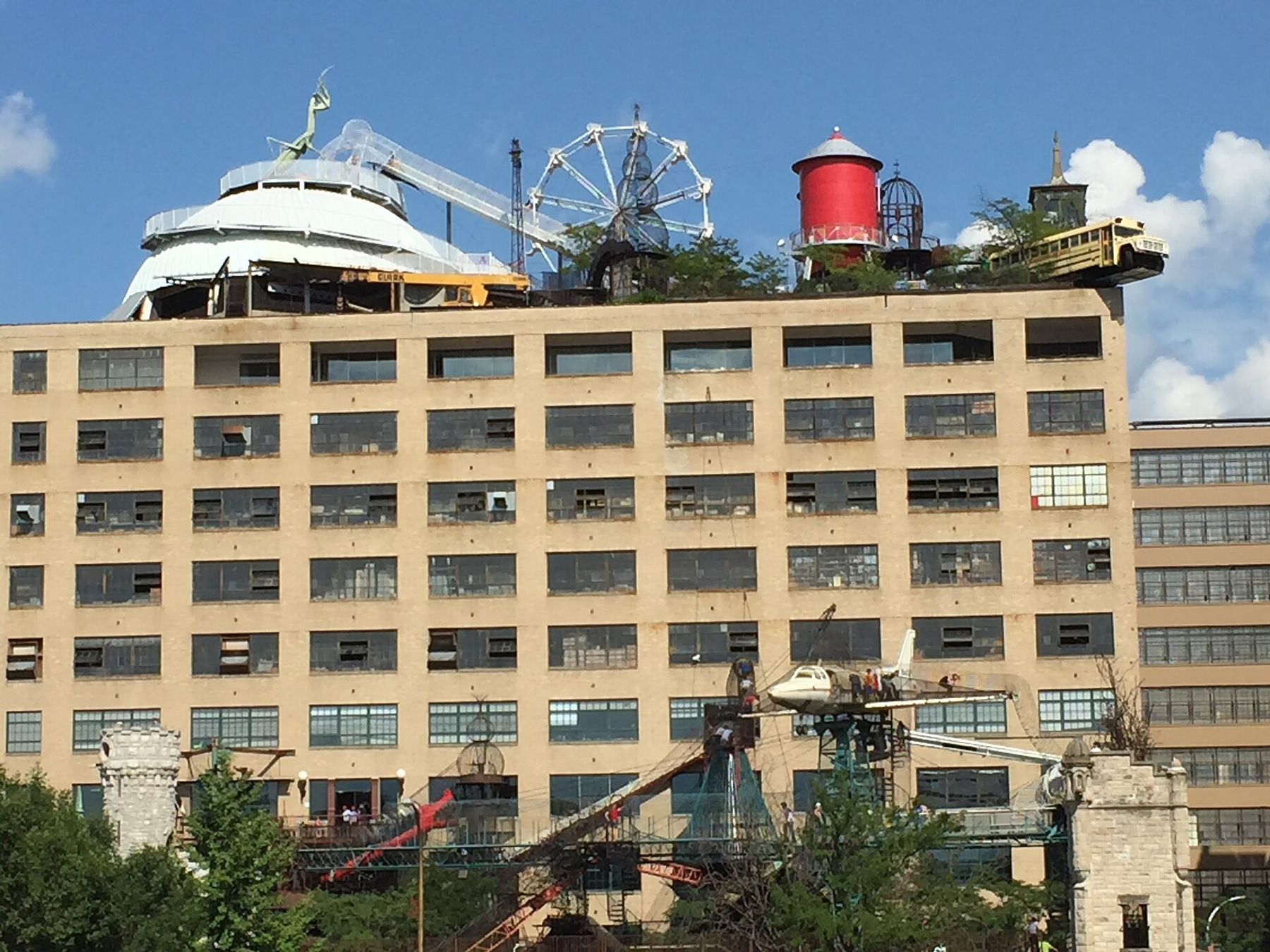
Washington Avenue was once lined with the warehouses of the shoe and clothing trades, big square buildings with loading docks and rows of identical windows. One of them, a former shoe company warehouse west of downtown, now has a school bus hanging off its roof, two old airplanes wired into a steel jungle out front, and a Ferris wheel turning above the cornice. That is City Museum, and it has been the oddest building in St. Louis since it opened in 1997.
The museum was built by the sculptor Bob Cassilly and a crew of artists and welders, mostly from material the rest of the city threw away: old bridges, chimneys, factory machinery, tile, cranes, fire escapes, architectural ornament salvaged from demolished buildings. Very little is behind glass. Most of it is there to be climbed on, crawled through or slid down.
Cassilly kept building until his death in 2011, and the crews carried on after him. That is why the place never looks finished. Corners change between visits, a new tunnel appears, an old passage closes, and the building has the feel of a workshop as much as an exhibit. The shoe trade left behind useful bones: thick floors built for heavy stock, freight elevators, and long spiral chutes once used to send boxes down between floors, one of which now carries people instead.
What is inside
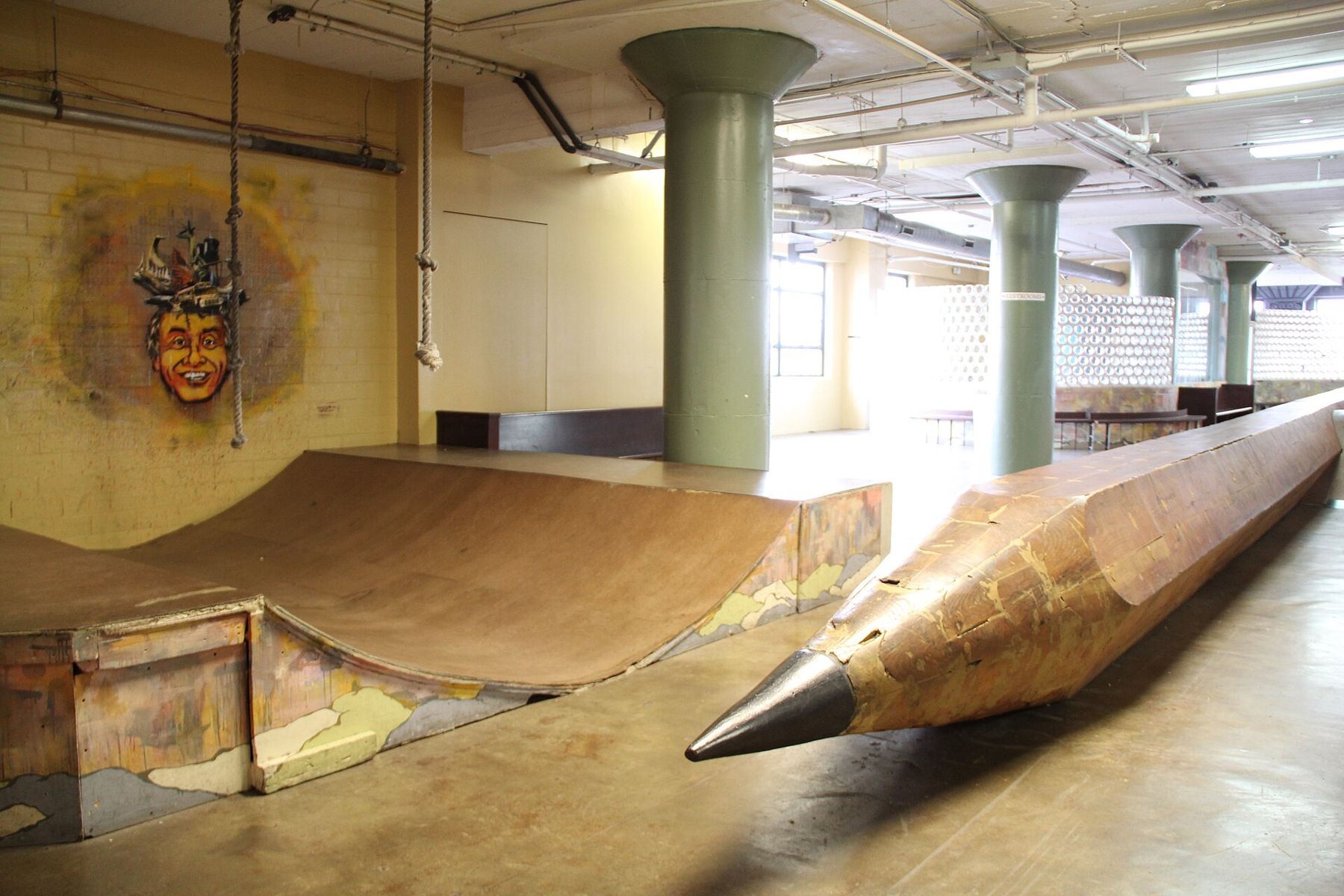
Indoors, the lower floors are a cave system built by hand, with tunnels winding through rock-like walls, dim chambers and narrow passages that open onto drops and ladders. From the caves, spiral slides drop through the floors of the building, the tallest running down most of its height. Above, the open warehouse floors hold a maze of walkways, an indoor skate park without skates, rooms of mosaics and oddities, and collections of salvaged architecture from all over the city.
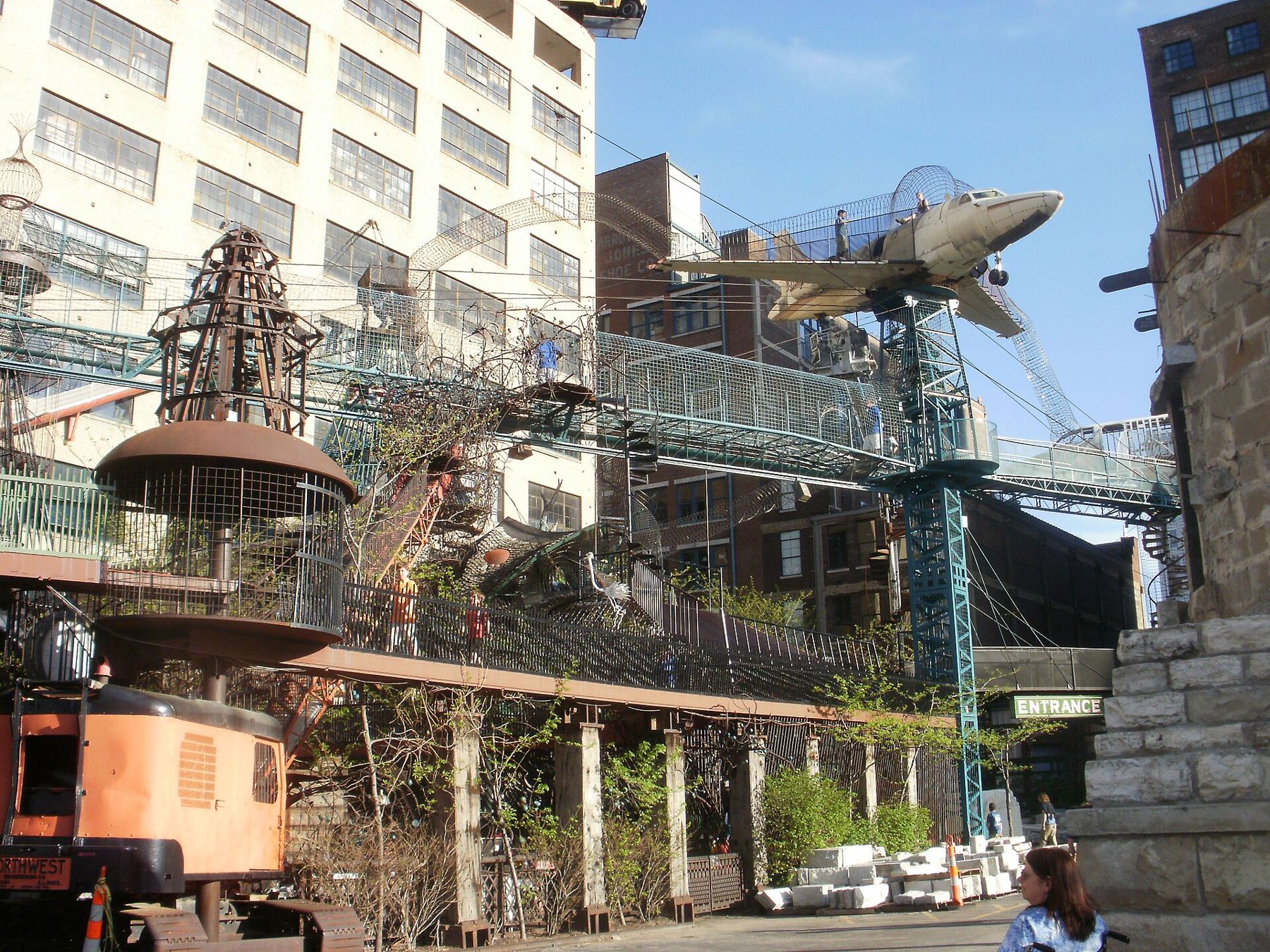
Outside, the steel climbing structure known as MonstroCity rises in front of the building. It is built of welded rebar and old structural steel, with wire-mesh tunnels running high over the sidewalk, two airplane fuselages to crawl through, a castle turret and slides back down. The tunnels are open to the air, so you look straight through the wire at the ground several stories below.
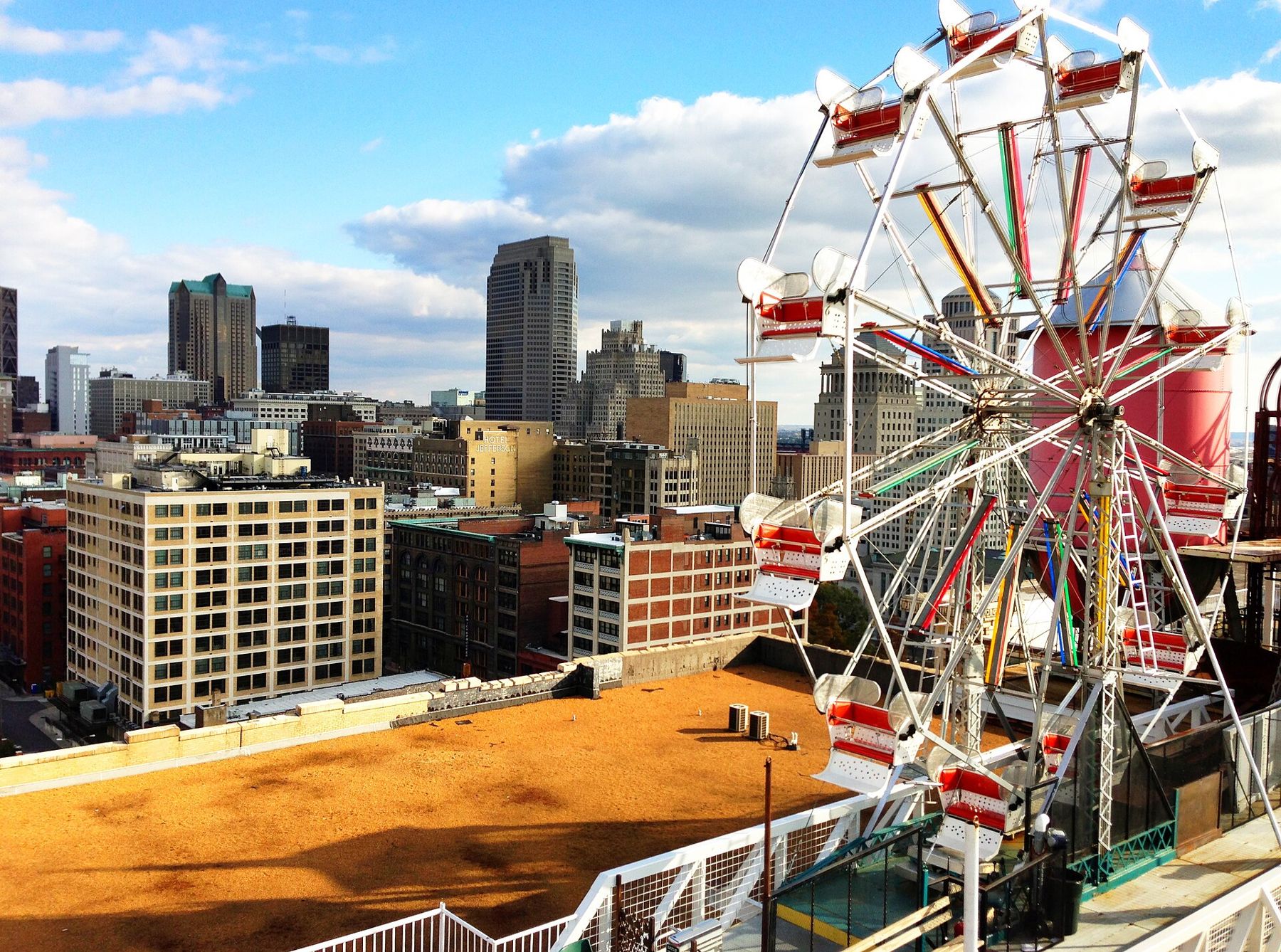
On the roof, open in warmer months, there is a small Ferris wheel, a praying mantis sculpture and more climbing, along with the school bus that leans out over the edge. The rooftop has usually carried its own separate charge and its own weather rules. Check what is open before you go.
What to wear
Dress as if you were going to help a friend clean out a crawl space. Long pants or leggings protect your knees, and many regulars bring knee pads. Wear closed-toe shoes with a good grip, never sandals. Skirts and dresses are a bad idea in the tunnels and slides, and loose jewelry, scarves and big bags catch on things.
Leave as much as you can at home or in a locker. Phones fall out of pockets on the slides. A small flashlight helps in the caves, which are dark by design. Expect to get dusty, and expect bruised shins: this is part of the experience, and nobody leaves without a scrape or two.
Mile 1.4A railroad palace on Market StreetWho it suits, and how long to stay
The museum is built for all ages, but not every part of it suits every body. Small children love the lower caves and the slides; some of the high outdoor tunnels are narrow, steep and exposed, and they can unnerve adults who don't like heights or tight spaces. Plenty of grown-ups climb everything, and plenty of others are happy on the walkways watching.
Children need watching. The building is a maze of levels and passages, and it is easy to lose sight of someone who has just disappeared into a tunnel. Agree on a meeting point near the entrance before you split up. The staff are around, but there are many floors to cover.
Teenagers tend to head straight for the outdoor structure and the roof, and older children can range on their own if they know the meeting point. Toddlers do best in the caves and the lower galleries, where the ceilings are low and the drops are small. For visitors who use a wheelchair or can't climb, much of the building is still worth seeing from its walkways and main floors, but many tunnels and the highest parts of the outdoor structure can only be reached on hands and knees; ask staff which routes work before you pay.
Very little is behind glass.
Give it at least three hours, and a whole afternoon if you have children who climb. Hours are unusual, with late evening openings on some days, and they shift with the seasons. Ticket prices, the rooftop charge and any age or height rules change, so look them up the day before.
When to go
Weekday mornings during the school year are the calmest time. Summer weekends and school holidays bring the biggest crowds. The building is a good answer to a cold or rainy day downtown, since most of it is indoors, though the outdoor structure and roof depend on the weather. In summer, the steel outside heats up in the sun and the upper floors can be warm, so carry water.
Late evenings, when they are offered, are popular with adults, and the mood changes after dark. The outdoor structure, lit up against the night, is worth seeing even if you don't go in.
Eat before you come or plan a break. A long session of climbing burns through energy fast, and tired children on high wire tunnels are no fun for anyone. Food and drink rules inside change, so check them ahead along with the hours.
Around the building
The blocks around the museum are part of the old garment district along Washington Avenue, where the loft buildings have been turned into apartments and offices. Walk east along the avenue toward downtown to see the run of tall warehouses, many with terracotta trim and stone bases. A few minutes south is Citygarden and the Gateway Mall, a good place to sit after the climbing.
The nearest MetroLink stations are Convention Center and Civic Center, each a walk of ten to fifteen minutes. From either, the line runs west to Union Station and on to midtown and the park. If the museum's salvaged ornament has you looking up at buildings, the story of the city's brick explains where much of it came from.