Glass, footlights and the fair's own museum
On the park's eastern side, a 1936 glass greenhouse, a huge open-air theatre that plays musicals under the summer sky and the history museum built on the fair's front door.
Three stops on one side of the park
Most visitors to Forest Park head straight for Art Hill and the zoo. The eastern half of the park, closer to the city, holds three quieter places that make an easy half day: a glass greenhouse from the 1930s, a vast outdoor theatre that comes alive only in summer, and a history museum that sits on the spot where the 1904 World's Fair had its main gate. All three are within a short walk of one another and of the Forest Park-DeBaliviere MetroLink station.
The Jewel Box
The Jewel Box opened in 1936, a greenhouse built as a showcase rather than a workshop. Its walls are almost entirely glass, stacked in stepped tiers that rise toward the middle, so the building looks a little like a glass wedding cake set on the lawn. In the low winter sun it sparkles, which is how it got its name.
Inside is a single tall room, filled with tropical plants and seasonal displays that change through the year: spring bulbs, summer color, chrysanthemums in autumn and a large display of poinsettias around the winter holidays. The space is small enough to see in half an hour, but it is warm and bright on a grey December day, and that is when it makes the most sense. Outside, formal pools and lawns run up to the building, and the gardens around it are often used for weddings and photographs on weekends.
The Jewel Box has had a modest entry fee at most times, with free hours on certain days; those arrangements change, so check before you go.
The Muny
A short walk from the Jewel Box brings you to the Muny, the city's outdoor summer musical theatre. It has been staging big Broadway-style shows in the open air since the early twentieth century, and it remains one of the largest outdoor theatres in the country. On a summer night thousands of people sit in a great fan of seats under the trees while a full orchestra plays and a huge stage turns from a Paris street to a Kansas farm.
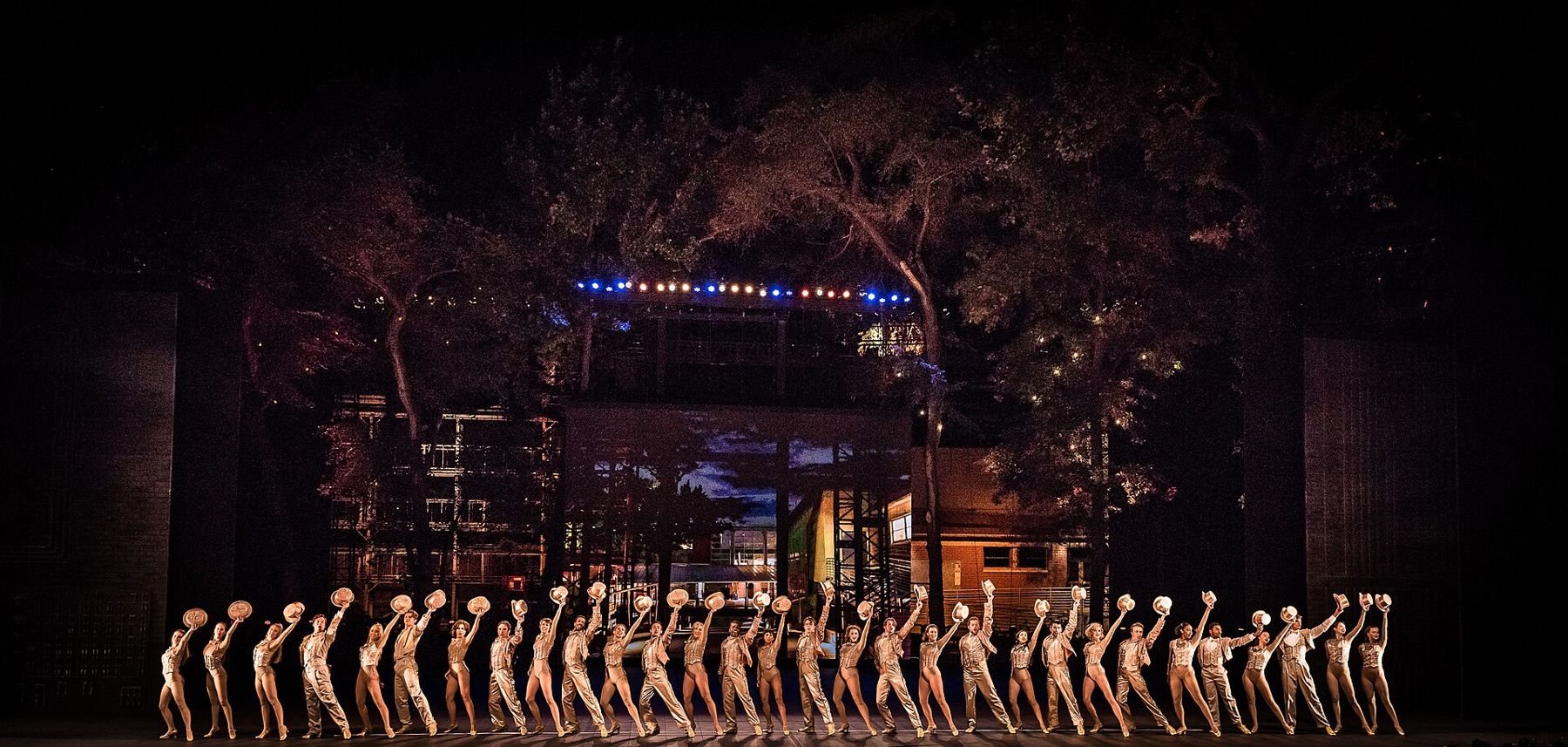
The setting is part of the show. Big old trees stand around the theatre, and on breezy nights you can watch their branches move in the stage lights. When storms threaten, the house and stage managers watch the radar as closely as the cues, and a performance may pause for rain and resume when it passes.
The free seats
The Muny has a long tradition of keeping some seats at the very back free, offered on a first-come basis on the night of the performance. People line up before the gates open with cushions and a little patience. The view is distant, but the sound carries and the atmosphere is the same as anywhere in the house. How many free seats there are and how they are given out can change, so check the current arrangement before you go.
Practical notes for a summer night
The season runs through the summer months, with a new show every week or two. Evenings in July can stay hot after dark. Bring water, bug spray and a light layer for late in the show, and plan on a slow exit when thousands of people leave at once; walking to the MetroLink station is often quicker than waiting to drive out of the lots.
Mile 5.9The museum at the top of Art HillThe Missouri History Museum
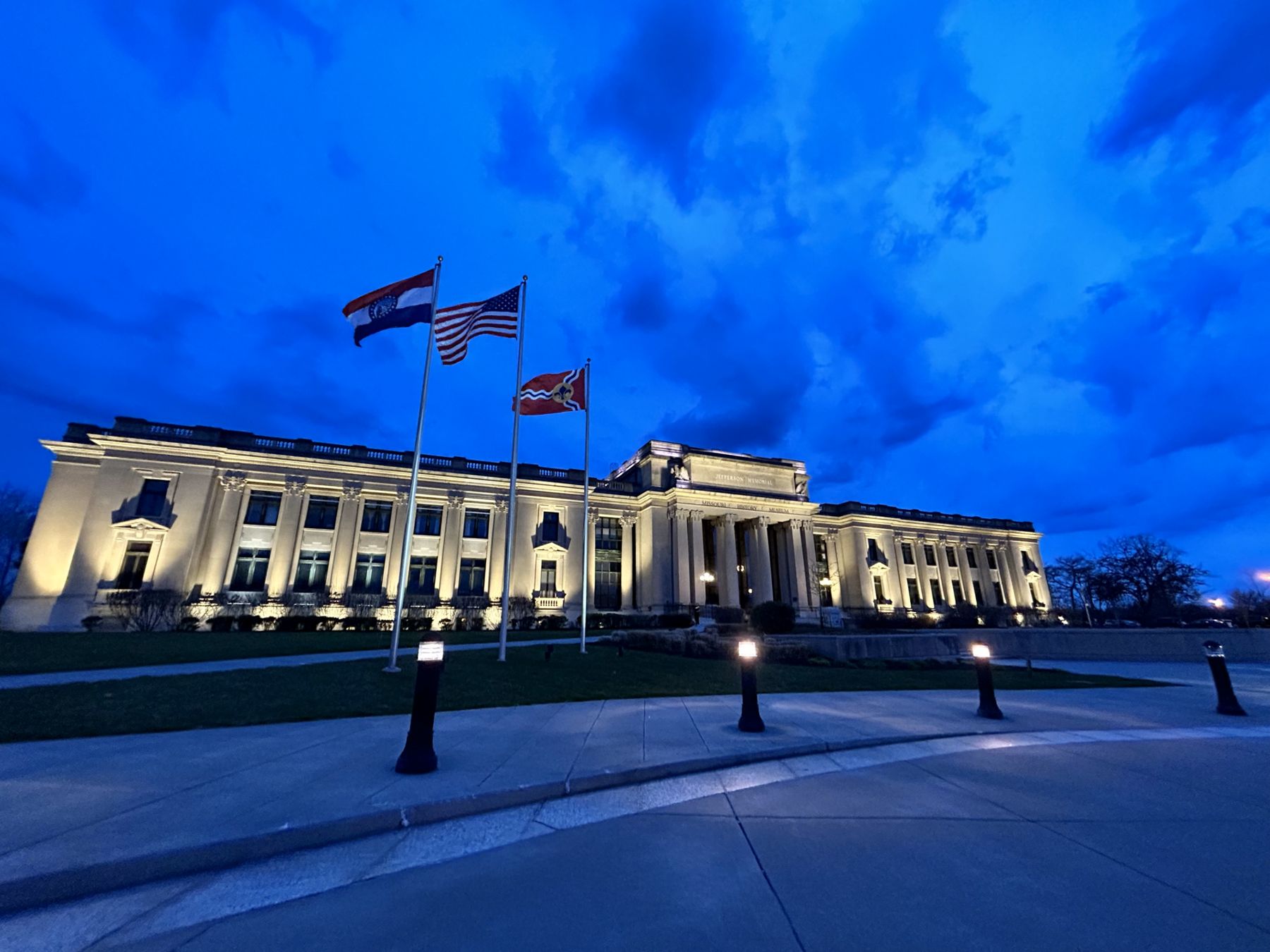
At the park's northern edge, facing Lindell Boulevard, stands the Missouri History Museum. Its home is the Jefferson Memorial building, a classical structure in pale stone completed after the 1904 fair and paid for in part by money the fair left over. It stands where the fair's main entrance once was, which makes it a fitting place to learn about the exposition.
A long-running exhibit about the 1904 World's Fair brings together objects, photographs and souvenirs from that summer, and it helps you picture the vanished palaces as you walk the park later. Other galleries cover the city from its French founding by Laclède and Chouteau through the river trade, the Civil War, the struggles over civil rights and the city's neighborhoods. A statue of Thomas Jefferson presides over the central hall.
General admission to the history museum has long been free, as at the art museum and the zoo. Some special exhibitions and programs charge, so check the current details before you go.
The museum is also a useful complement to the Old Courthouse downtown, where the story of Dred and Harriet Scott and their suits for freedom is told on the spot where the cases began.
Putting the three together
A sensible order is to start at the history museum when it opens, walk south through the park to the Jewel Box, and finish at the Muny on a summer evening. In winter, swap the theatre for a longer look at the greenhouse and a walk around the frozen lagoons.
From the Jewel Box it is an easy walk west to the Grand Basin and the art museum on Art Hill, and the loop through Forest Park ties all of these places together on paths and drives. The Saint Louis Zoo is a longer walk to the southwest.
Getting there
MetroLink's Forest Park-DeBaliviere station sits just north of the park's eastern side. From the station you can walk to the history museum in a few minutes and on to the Jewel Box and the Muny in a quarter of an hour or so. The streets around the park are busy with traffic on show nights, and parking near the Muny fills well before curtain time.
The eastern side of the park is busy and well used during the day and on performance nights. After dark on non-show nights, it is more sensible to stay on lit paths and drives, as in any large city park.
When to come
Summer belongs to the Muny, and the theatre gives the whole park a festive feeling on show nights. December belongs to the Jewel Box, with its holiday flowers under the glass. The history museum works in any season and is a good refuge from summer heat or a cold rain. If you want all three at their best on one trip, come in early summer, when the greenhouse is still green, the theatre has just opened and the evenings are warm but not yet heavy.